The Bedroom Edit: How to Create a Space That Helps You Rest
Retreat into a space designed for restoration.
Retreat into a space designed for restoration.
I think bedrooms are the most personal rooms in any home. Nobody really sees them except you. And maybe that is exactly why they often get the least attention.
We spend hours debating paint colours for the living room. We research sofas for weeks. But the bedroom? We throw in a bed, a wardrobe, some curtains — and call it done.
It is a strange thing to do to the room where you start and end every single day.
Your Bedroom Should Feel Like an Exhale
That is the goal. You walk in, and something in you relaxes. The visual noise of the day just… drops away.
To get there, you need fewer things, not more. Bedrooms accumulate clutter faster than any other room in the house. Clothes on chairs. Chargers on nightstands. Books in piles. Bags on floors. It happens slowly, and then suddenly the room you are supposed to rest in becomes the most stressful room in the house.
Start by removing everything that does not serve sleep, relaxation, or genuine joy. If it does not belong in a bedroom, it should not be in yours.
The Bed Is Everything
Yes, this sounds obvious. But people underinvest in beds constantly — and then spend fortunes on lamps and cushions that do not fix the problem.
A good mattress is not a luxury. It is a health decision. You sleep on it for roughly a third of your life. The same logic applies to pillows and bedding. Thread count matters less than material. Linen and cotton breathe better than synthetic fabrics. They also age better — developing that soft, lived-in quality that no new polyester duvet will ever achieve.
Make your bed every morning. Not because it makes you a better person — but because it transforms the entire feeling of the room in about four minutes.
Colour and Light: The Mood of the Room
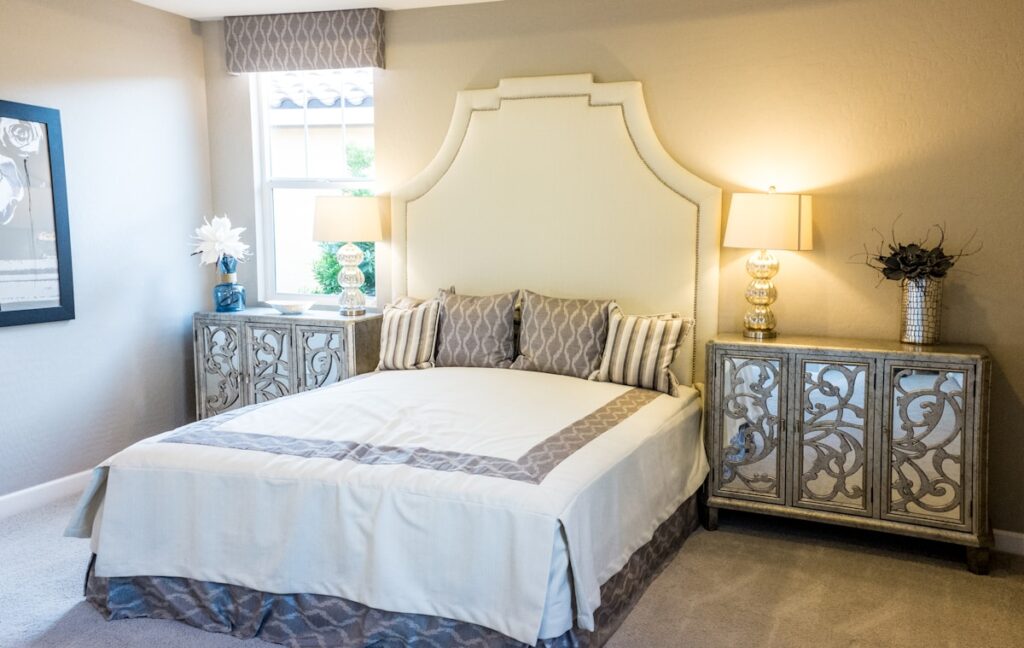
Bedrooms respond brilliantly to deeper, quieter colours. Think dusty lavender, warm clay, sage green, slate blue. These tones recede rather than advance — they create the sense that the walls are further away, the room is calmer, the air is somehow heavier in a good way.
Avoid cold white in a bedroom if you can. It reads as clinical rather than calm, especially by lamplight in the evening.
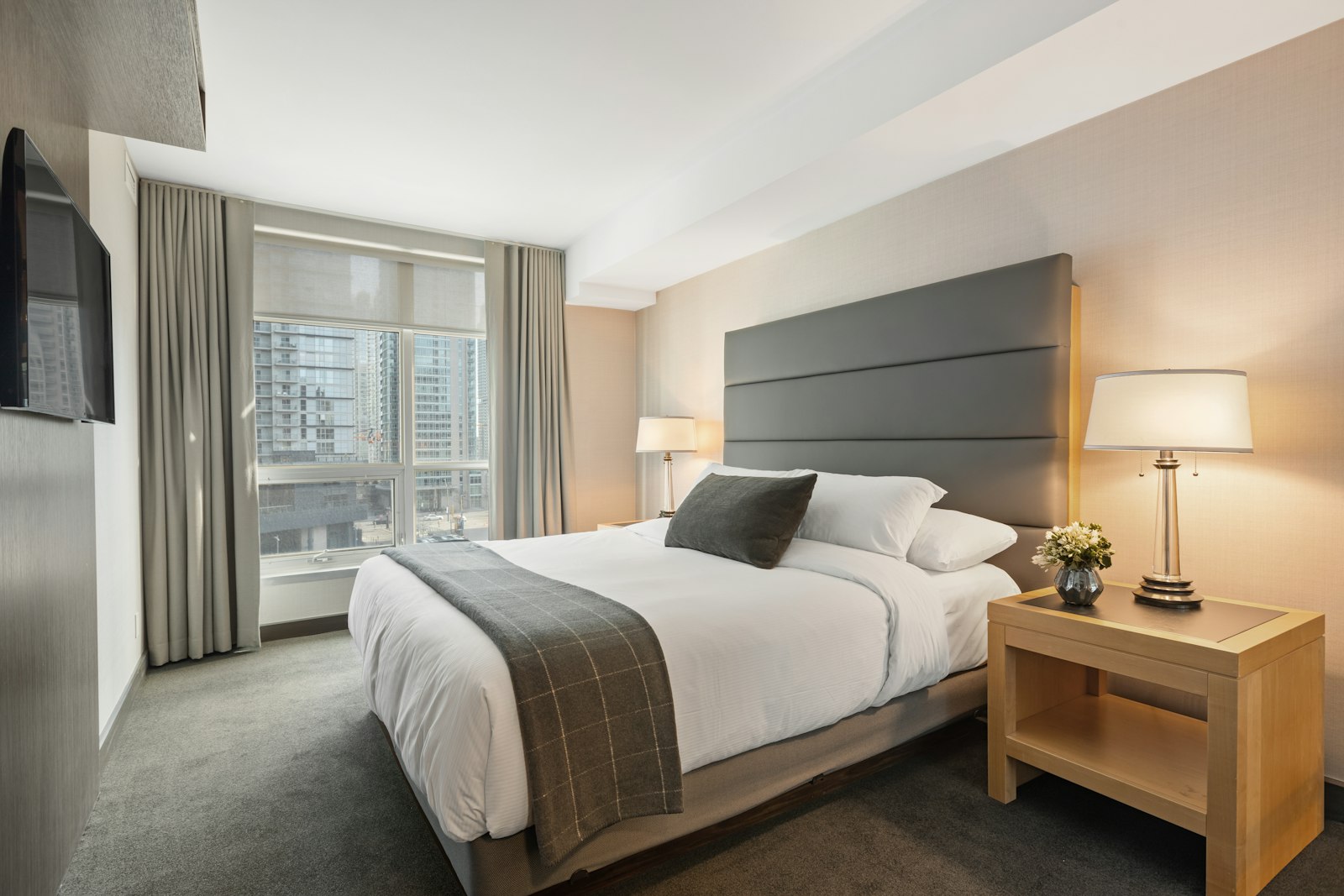
Speaking of lamplight — the lighting in a bedroom matters enormously. Your overhead light should be on a dimmer, or avoided entirely in the evenings. Warm bedside lamps at the right height for reading are essential. And blackout curtains or blinds are, in my opinion, non-negotiable. Good sleep starts with a dark room.
Texture Is What Makes a Bedroom Feel Luxurious
You do not need expensive furniture to make a bedroom feel beautiful. You need layers of texture.
Think about what you touch in a bedroom. The bedding, the rug, the curtains, the throw. These are your sensory experiences of the room. If they all feel good, the room feels good — regardless of what the furniture cost.
A jute rug underfoot when you step out of bed in the morning. A heavy linen duvet that feels weighted and grounding. A soft throw draped at the foot of the bed. Velvet cushions that hold their shape. These are the details that make people walk into a bedroom and say: I want to stay in here.
The Furniture Edit
Be ruthless about what goes in a bedroom. Ideally: the bed, two nightstands, a wardrobe or dressing area, and perhaps a single chair or ottoman. That is usually enough.
Resist the urge to fill every corner. Empty space in a bedroom is not wasted space — it is breathing room. It is visual quiet. It is part of what makes the room feel like a retreat.
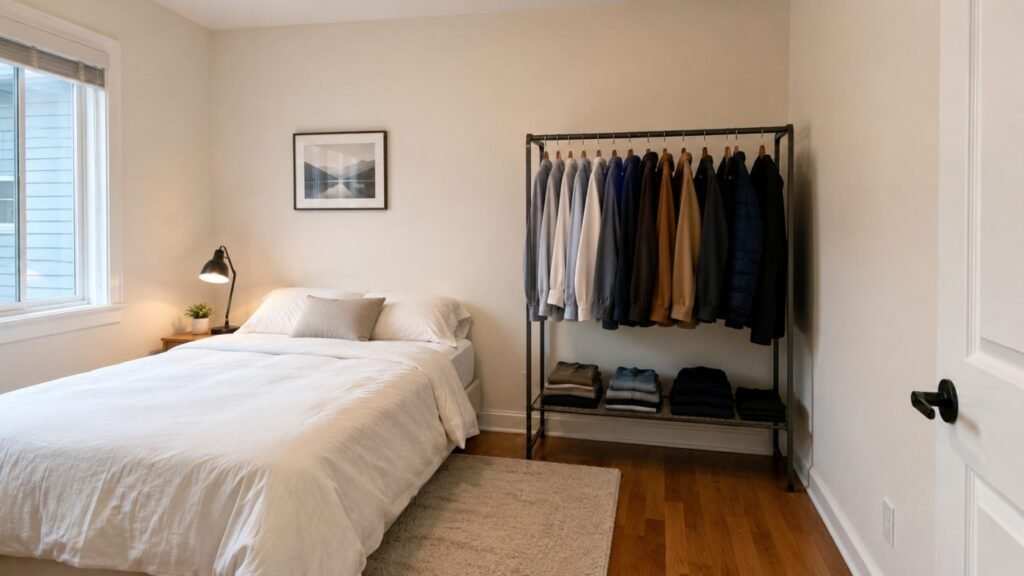
That edit is harder when the room has no wardrobe to begin with. If everything you own has to live in the open, the pieces you choose have to earn their place twice over — our guide to bedroom storage without a closet covers what actually works in that situation.
If you need a desk or workspace in your bedroom, try to give it a dedicated corner and create some visual separation between the work area and the sleeping area. Even a plant or a bookshelf acting as a divider can help your brain make that switch when it is time to rest.
The Small Things That Matter
A carafe of water on your nightstand. A small plant on the windowsill. A scented candle you only light in the bedroom — so your brain starts to associate the scent with winding down. Fresh flowers when you can manage it. A piece of art that you genuinely love, at eye level, where you can see it from the bed.
None of these are expensive. All of them add up to a room that feels considered and personal and yours.
A bedroom that truly works does one thing above all else. It tells your body and your mind that it is safe to rest. Everything else — the colour, the furniture, the lighting — is in service of that single idea.
Products You Might Like