Your Bedroom Might Be Why You Sleep Badly: 8 Fixes That Actually Work
Eight environmental fixes for a bedroom that is working against your sleep — starting with the three that matter most.
Eight environmental fixes for a bedroom that is working against your sleep — starting with the three that matter most.
This post contains affiliate links. If you buy through one, HomziDecor may earn a small commission at no extra cost to you. We only suggest things we would tell a friend to buy.
You have tried the apps. You have tried going to bed earlier. You have read that you should not look at your phone, and some nights you even manage it.
What most sleep advice skips is the room itself. A bedroom can be beautiful and still be working against you — too bright at 5am, a few degrees too warm, lit from a single glaring bulb overhead, and full of things your brain quietly keeps track of. None of that shows up in a photograph. All of it shows up at three in the morning.
The eight fixes below are environmental, not medical. Most cost under fifty dollars and take an evening. They are ordered by how much difference they tend to make.
Jump to a fix
The short answer
If you only change three things: make the room properly dark, make it cooler, and stop using the ceiling light in the hour before bed. Those three do more than everything else on this list combined.
The rest — noise, bedding, clutter, phone placement, pillow height — are worth fixing once those are handled.
Total for the first three: roughly $60–120, and one evening’s work.
What each fix actually changes
| Fix | What it addresses | Typical cost | Effort |
|---|---|---|---|
| Blackout curtains | Early waking, street light | $25–50 | Low |
| Cooling the room | Waking hot at 3am | $20–60 | Low |
| White noise | Traffic, neighbours, snoring | $20–50 | Low |
| Bedside lighting | Trouble winding down | $25–60 | Low |
| Better bedding | Overheating, restlessness | $40–80 | Low |
| Closed storage | A room that feels busy | $20–60 | Medium |
| Phone off the nightstand | Scrolling, night checking | $15–30 | Low |
| Right pillow height | Neck ache, tossing | $30–60 | Low |
Starred rows are the three to do first.
Eight bedroom fixes for better sleep
Make the room properly dark
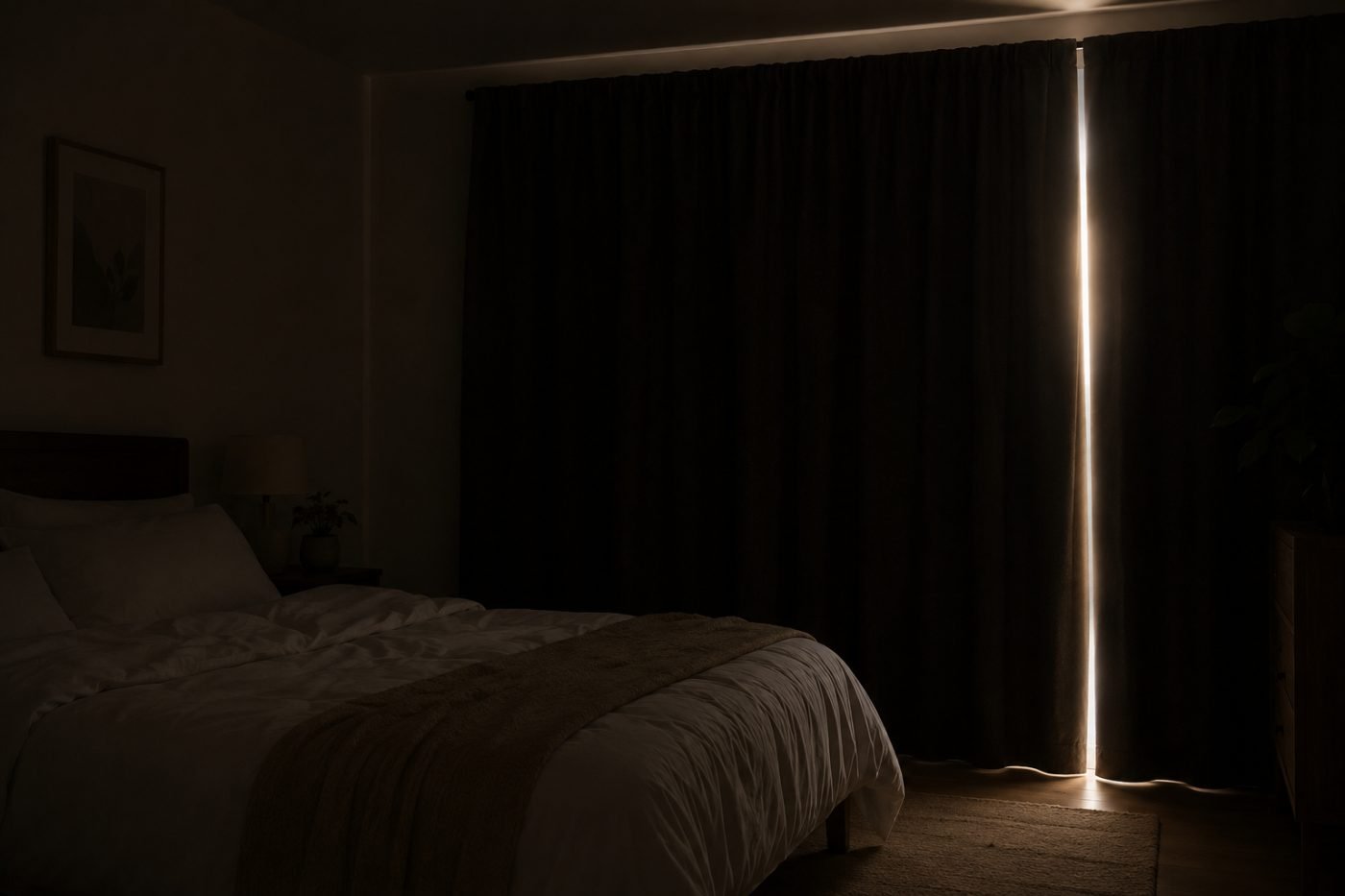
This is the fix people underestimate most. “Dark enough” usually is not. If you can make out the shape of your hand once your eyes adjust, there is more light in the room than you think.
The two usual culprits are a street lamp outside and early summer sunrise. Ordinary lined curtains cut brightness but do not stop it. Proper blackout fabric does, and the difference on a June morning is not subtle.
What to look for
Panels described as 100% blackout rather than “room darkening” — the two are not the same thing. Buy them wider than the window, ideally 1.5× the width, so there is fabric to overlap at the edges. Mount the rod higher and wider than the frame; most light leaks around the sides, not through the fabric. Grommet tops hang flatter than rod pockets.
Filtered to 100% blackout grommet panels. NICETOWN and MIULEE are the long-running best sellers here; H.VERSAILTEX if you want a linen look.
Get the room cooler than feels natural
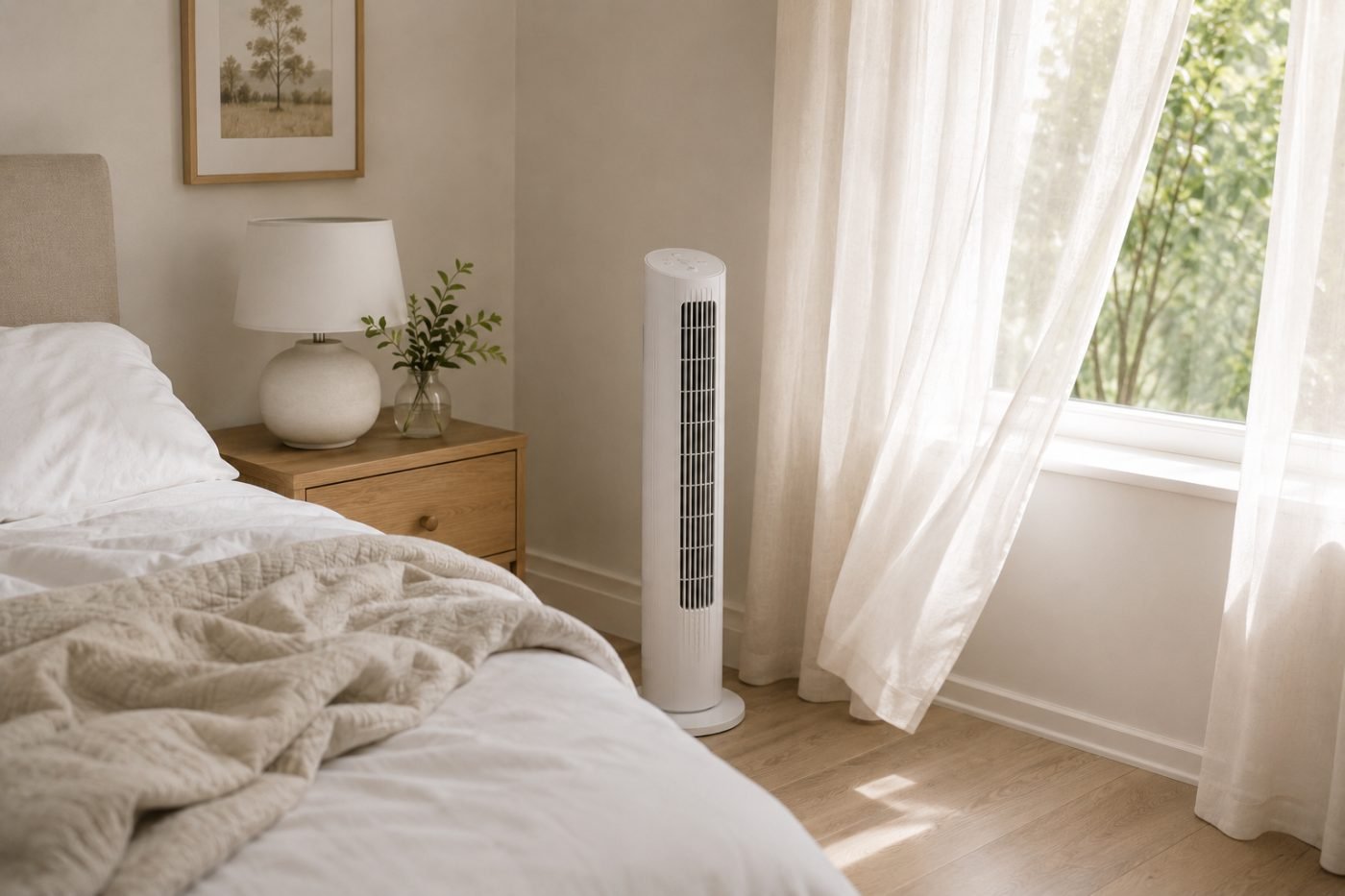
Body temperature drops as you fall asleep, and a warm room gets in the way of that. Most people keep their bedroom several degrees warmer than is ideal, largely because a cool room feels unwelcoming when you are awake and getting into bed.
The usual advice lands somewhere around 18–19°C (65°F). You do not have to be precise about it. Set it cooler than feels obviously comfortable, and let the duvet do the rest.
What to look for
If you cannot control the heating — common in flats and rentals — a quiet fan is the cheapest fix. Look for a stated noise figure under 40 dB, a genuine low setting, and a timer. Bladeless and tower fans are quieter than desk fans at the same airflow. In winter, the fix is usually a lighter duvet rather than a colder room.
Filtered to quiet bedroom fans with a timer. Check the dB figure is published — if a listing does not state it, assume it is loud.
Cover the noise instead of fighting it
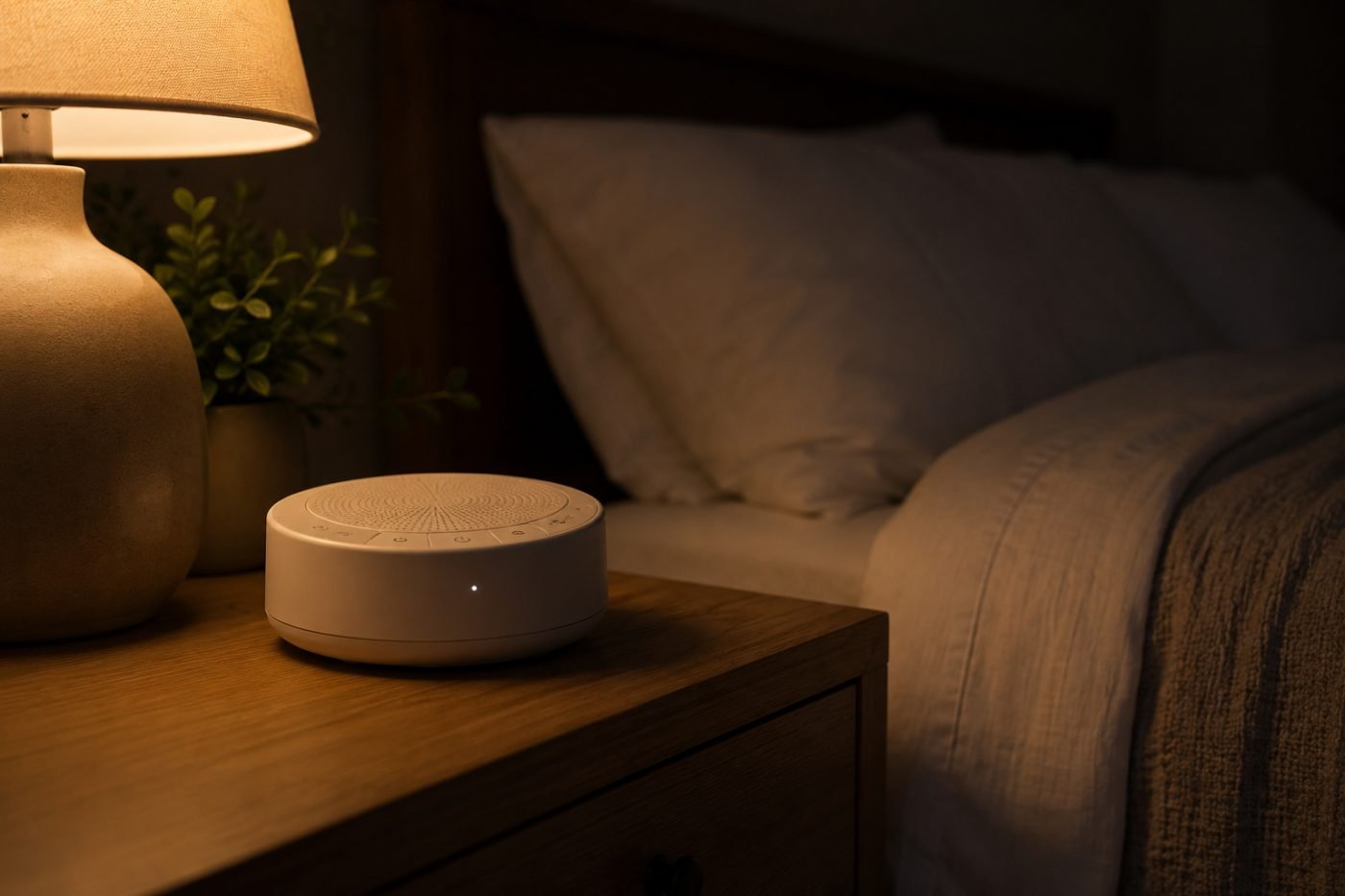
You cannot soundproof a rental, and you cannot stop the bin lorry. What you can do is raise the floor of background sound so that individual noises stop standing out. A steady hum is far easier to sleep through than intermittent silence broken by a car door.
Mechanical white noise machines — the ones with an actual fan inside — sound more natural than digital loops, and there is no repeating pattern for your brain to latch onto. Digital ones are cheaper and more portable.
What to look for
If you are sensitive to looping, choose a mechanical unit — the Yogasleep Dohm is the long-standing benchmark. Otherwise look for non-looping in the description, adjustable volume, and no bright display. Avoid models where the only power option is USB if you want it running all night.
Filtered to sleep sound machines. Yogasleep Dohm for mechanical; Homedics SoundSleep is the budget pick.
Stop using the ceiling light in the evening
A single bright bulb overhead is the least flattering and least restful way to light a bedroom. It puts light where you are not using it, casts hard shadows, and keeps the room at daytime brightness right up until the moment you switch it off.
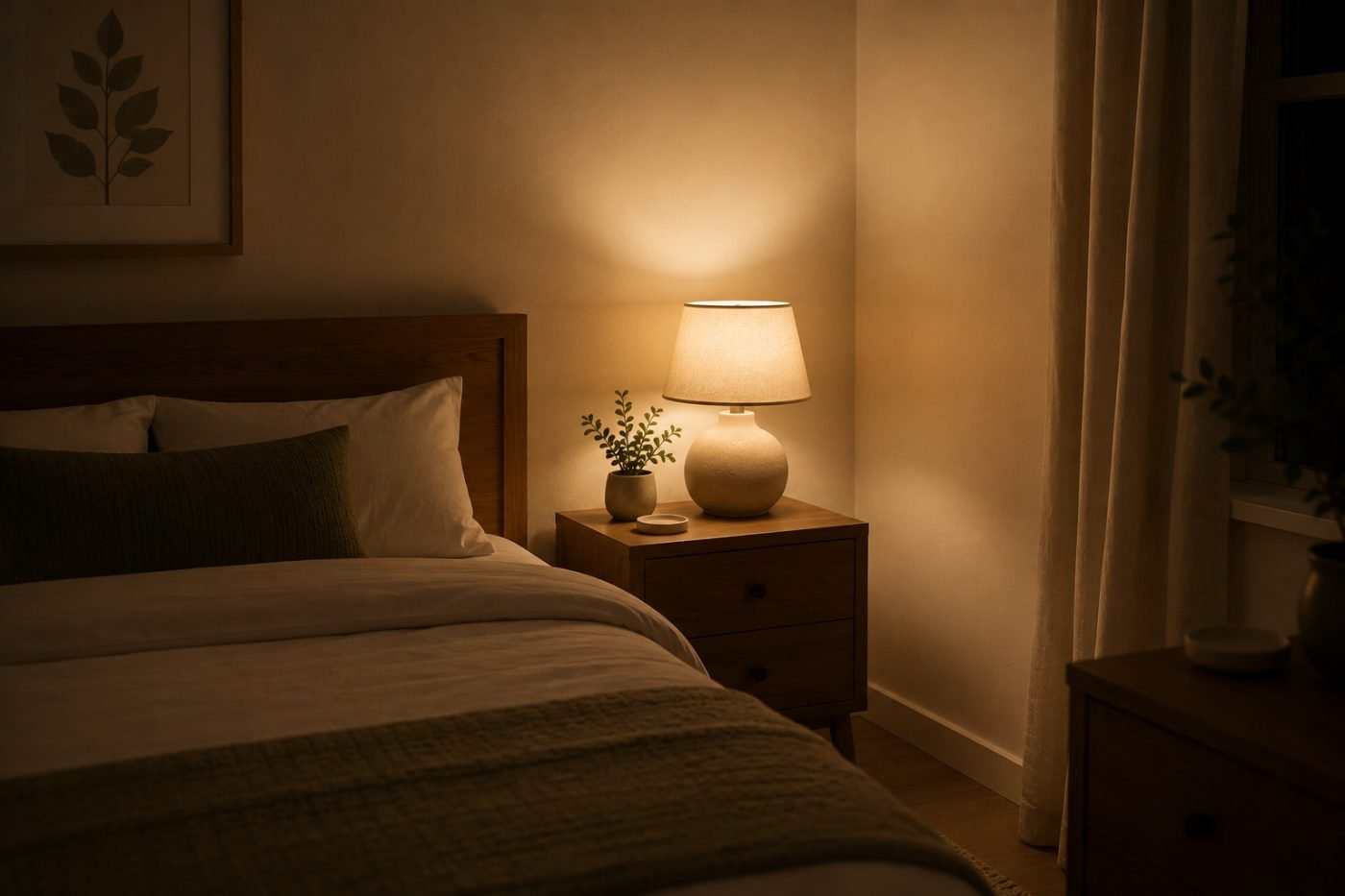
The fix is not one lamp instead. It is two or three low, warm sources at roughly eye level or below — bedside, a corner, a shelf — so you can drop the light level in stages rather than going from full brightness to black.
What to look for
Bulbs at 2700K or warmer. Anything labelled daylight or cool white belongs in a kitchen, not a bedroom. A dimmable bedside lamp, or a smart bulb if your fitting has no dimmer. A shade that hides the bulb from your eye line when you are lying down — this matters more than the lamp’s looks.
Filtered to dimmable bedside lamps. If your lamp has no dimmer, a warm smart bulb is the cheaper route to the same result.
Upgrade what actually touches your skin
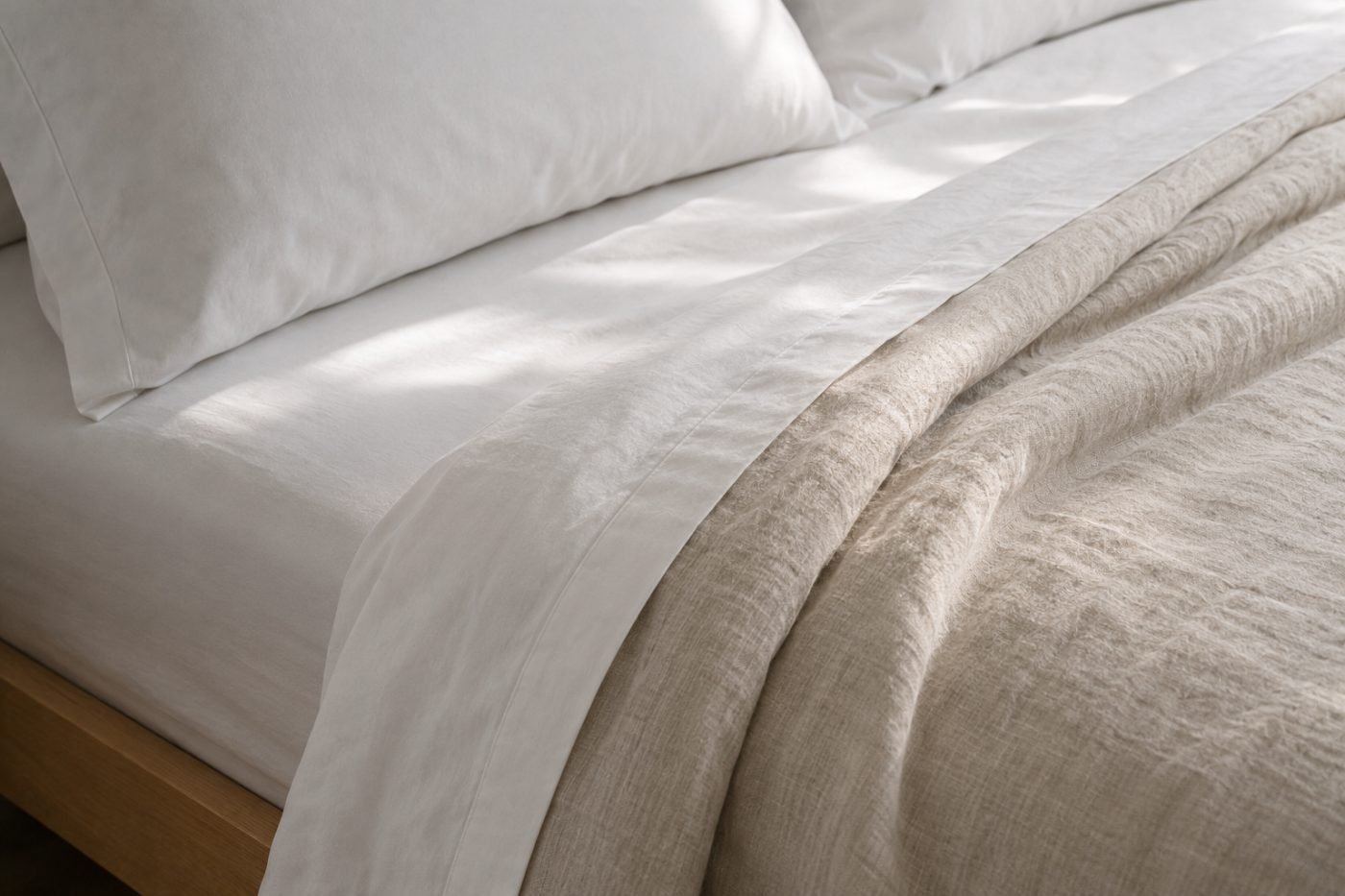
You spend a third of your life against these surfaces and nobody sees them. If the budget is limited, sheets and a pillow beat a headboard, a rug and a piece of art combined.
Thread count is largely marketing above about 400 — weave and fibre matter far more. Percale sleeps cool and crisp. Sateen is warmer and smoother. Linen is the most breathable and softens over years rather than wearing out.
What to look for
Long-staple cotton in percale if you sleep hot, sateen if you sleep cold, washed linen if you want both and can live with the creases. Check the listed pocket depth against your mattress, including any topper. Ignore anything advertising a thread count above 800 — it is almost always counted creatively.
Filtered to percale cotton sheet sets — the cooler weave. Search sateen instead if you tend to feel cold at night.
Get the clutter behind a door or a lid
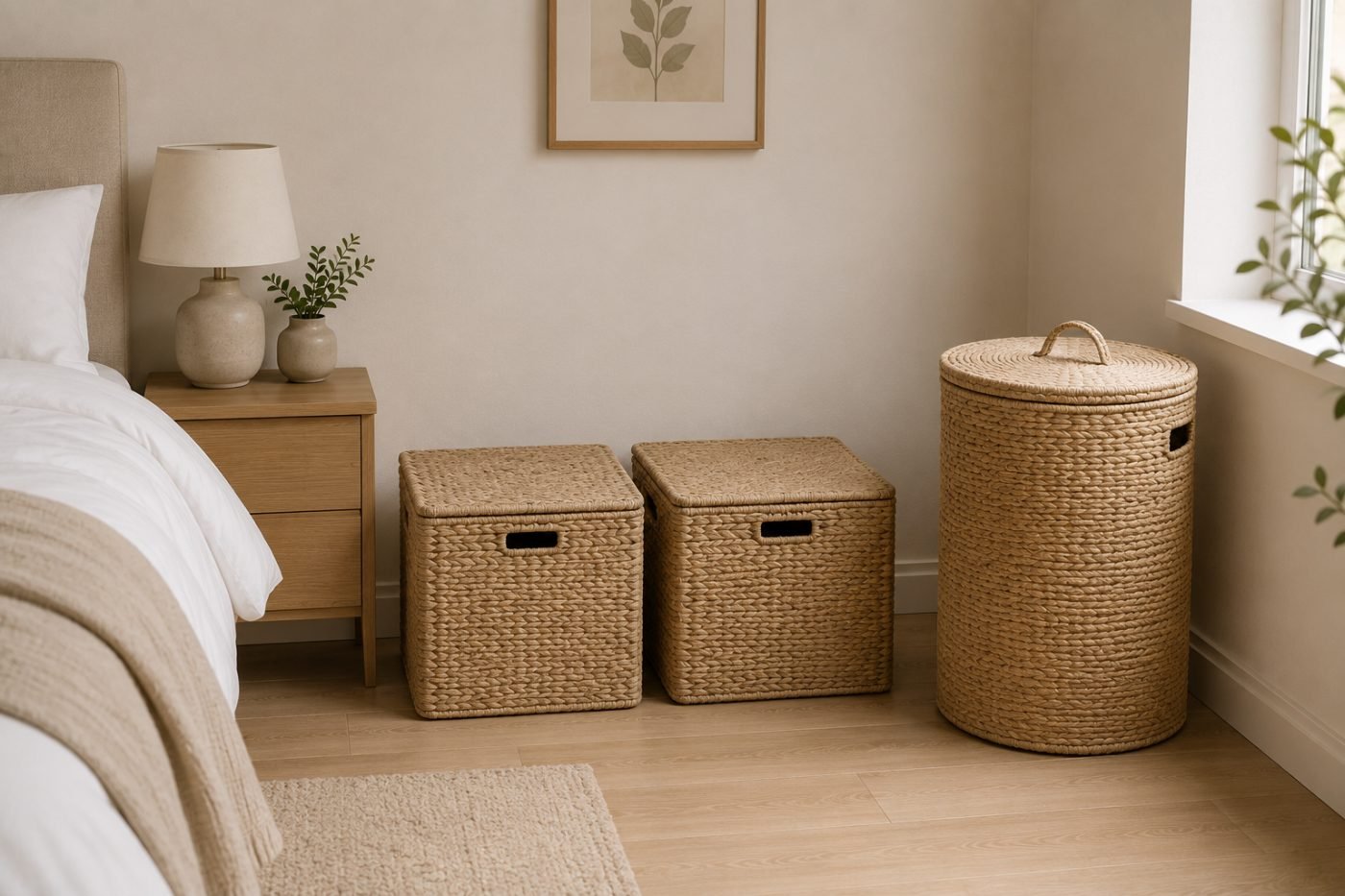
A visually busy room is harder to switch off in. It does not have to be spartan — it has to be selective. Closed storage is worth more in a bedroom than in almost any other room, because when you cannot see the clutter your brain stops tracking it.
The practical version of this: clear surfaces, put the laundry somewhere with a lid, and get anything you only use occasionally out of sight entirely.
What to look for
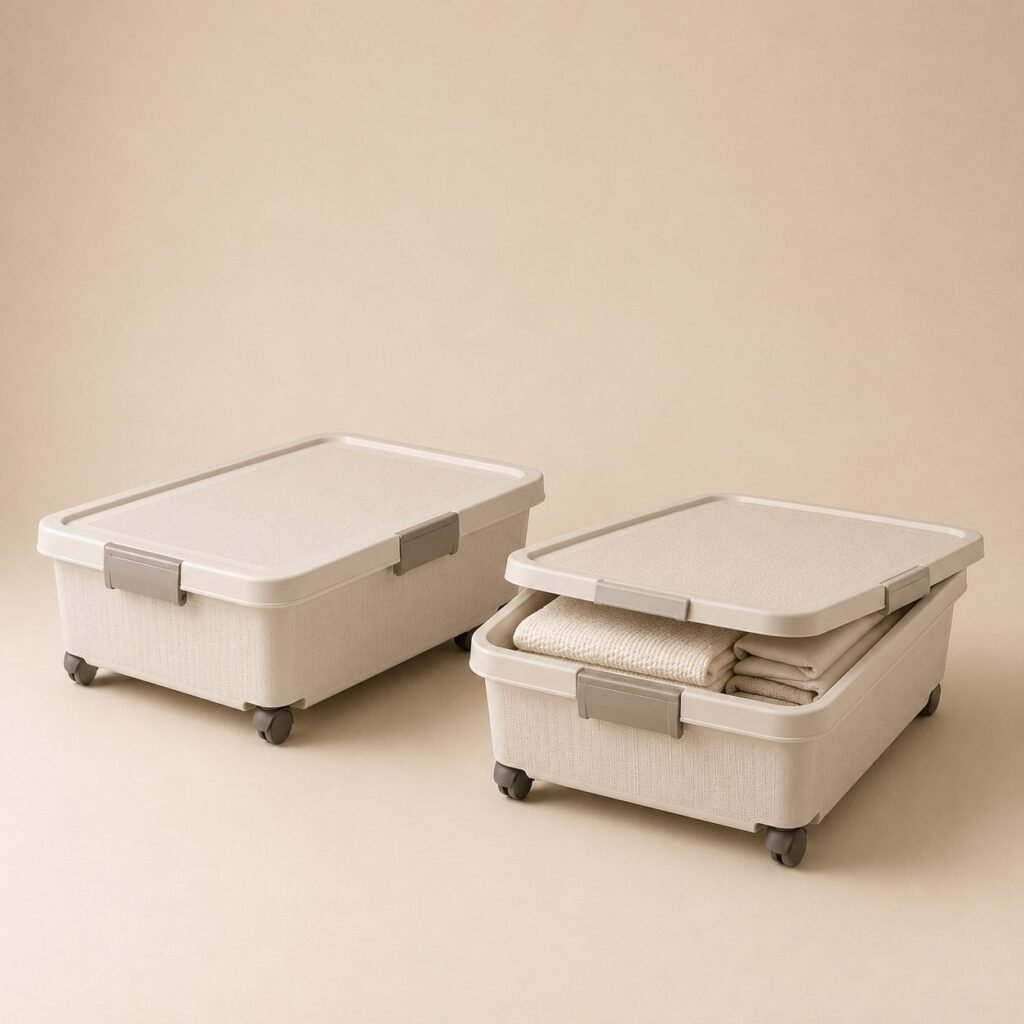
Lidded baskets rather than open ones — open baskets just relocate the visual noise. A hamper with a lid. Under-bed bins for anything seasonal. If your room has no wardrobe at all, that is a bigger problem than a basket solves; see the guide linked at the end of this article.
Filtered to lidded storage baskets. Fabric and woven read softer in a bedroom than plastic bins.
Move the phone out of arm’s reach
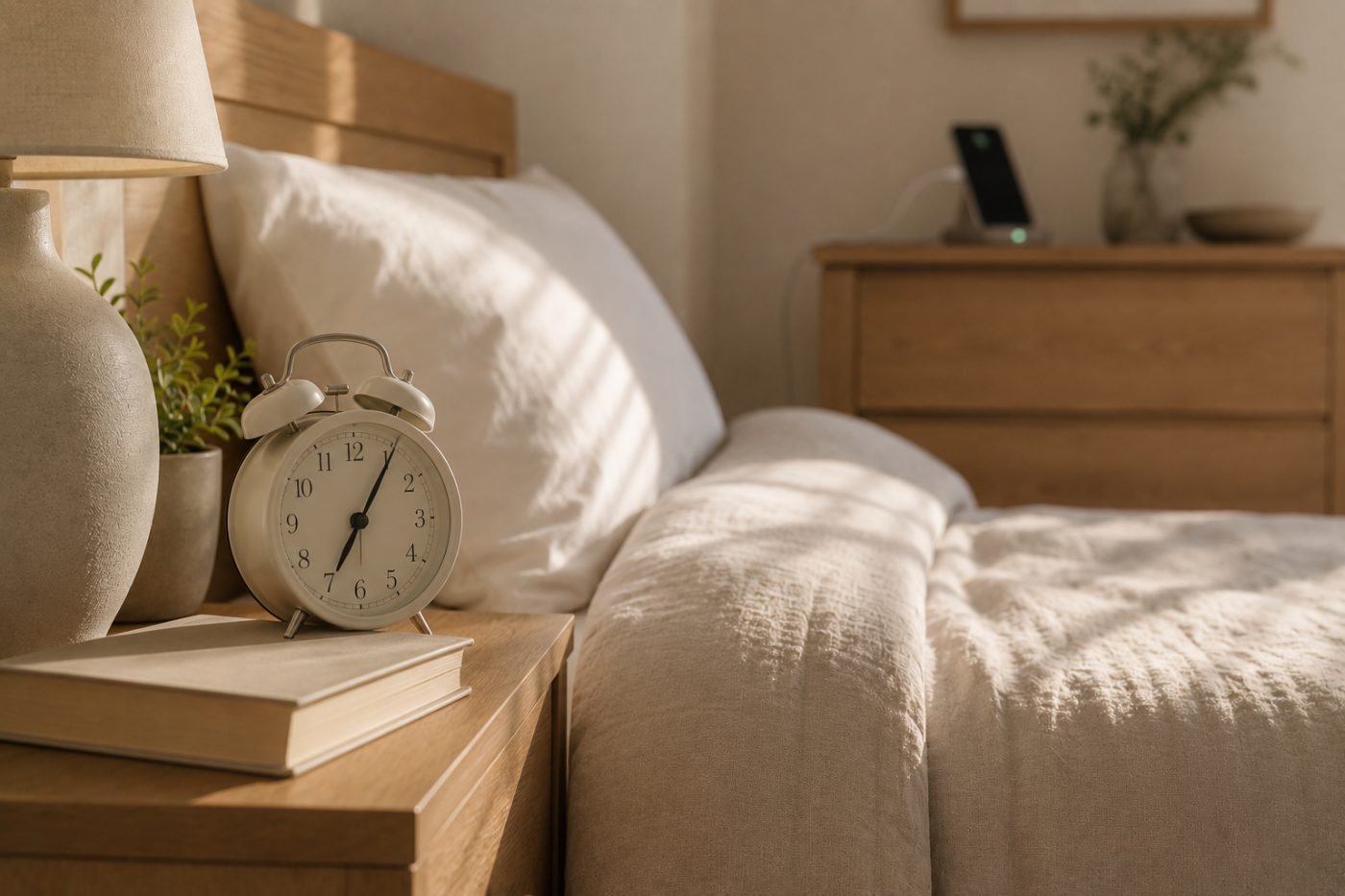
Most people know this one and do not do it, because the phone is the alarm clock. Remove that job from it and the rest becomes much easier.
Checking the time in the night is its own problem: it turns a half-waking into a calculation about how many hours are left. A clock you can glance at without lighting up your face solves both.
What to look for
A dedicated alarm clock with a dimmable or switchable display — a bright blue LED at head height is its own small problem. Analogue if you would rather not see the time at all. Sunrise alarm clocks are a genuinely nice upgrade in winter, though they cost several times more. Then charge the phone across the room.
Filtered to bedside alarm clocks with dimmable displays. Sunrise models cost more but are worth it if you wake in the dark half the year.
Match the pillow to how you actually sleep
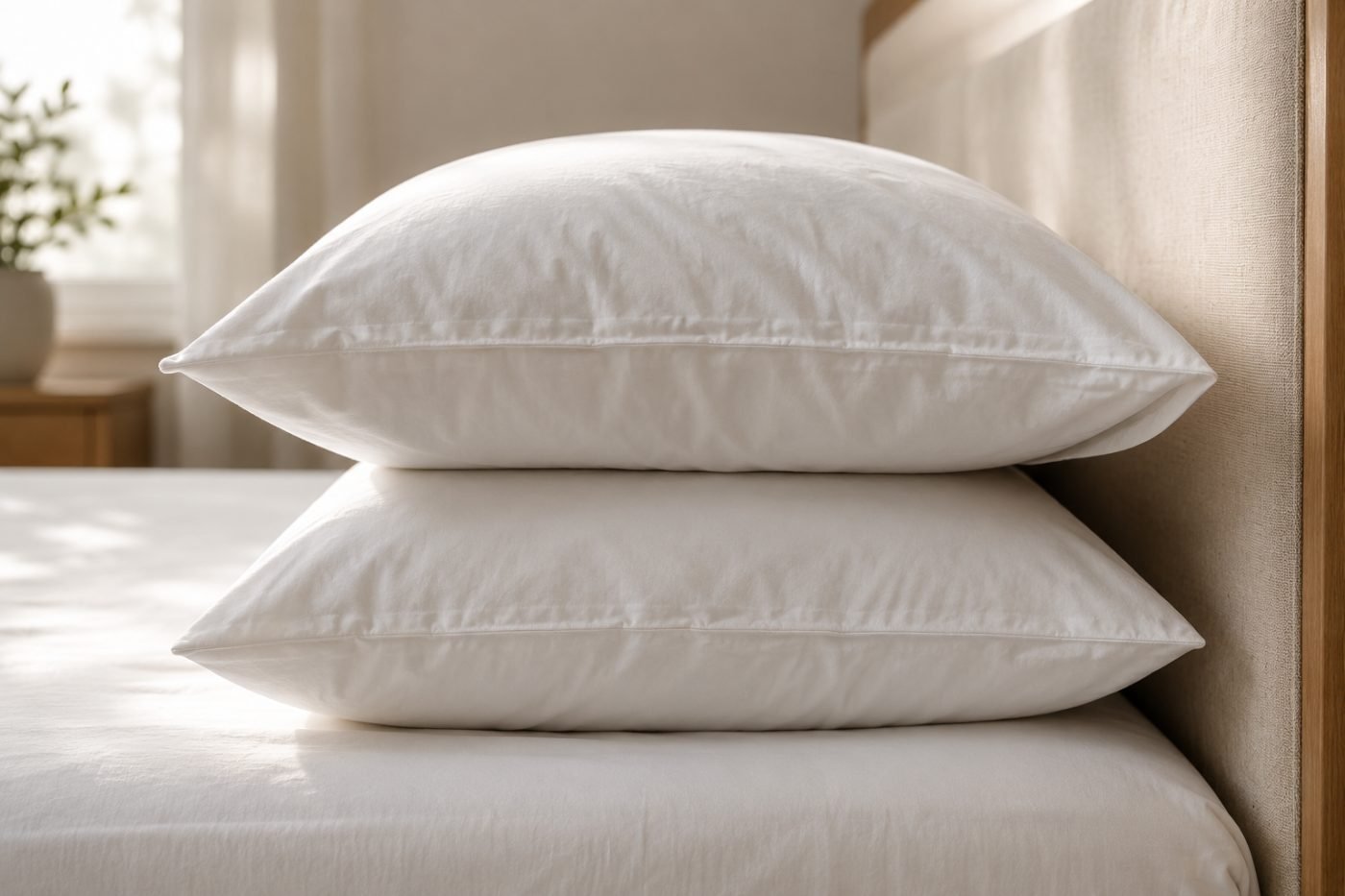
Pillows get replaced when they look tired rather than when they stop working, and most people are using the wrong height for their sleeping position without ever having considered it.
The principle is simple: your head should sit so your neck stays in line with your spine. Side sleepers need the most height, because there is a shoulder’s width of gap to fill. Back sleepers need less. Front sleepers need very little, and often sleep better with almost none.
What to look for
Listings state a loft measurement — use it. Roughly 4–6 inches for side sleepers, 3–5 for back, under 3 for front. Adjustable-fill pillows let you tune it, which is the safest choice if you are unsure or you change position through the night. Memory foam holds height; down flattens and needs regular plumping.
Filtered to adjustable-loft pillows — the safest pick when you are not certain what height you need.
Four things people get wrong
They are different products. Room darkening reduces light; 100% blackout blocks it. If the listing does not say 100%, assume it does not.
Most light comes in around the edges, not through the fabric. Mount the rod higher and wider than the frame and buy panels 1.5× the window width. This costs nothing extra and matters more than the fabric grade.
The problem is the position, not the brightness. Light coming from directly above is what makes a room feel like a corridor. Add lamps instead.
Above roughly 400 the number stops meaning much and starts being counted creatively. Weave and fibre length decide how sheets feel and how cool they sleep.
Bedroom and sleep questions, answered
What temperature should a bedroom be for sleep?
Commonly cited guidance lands around 18–19°C, or roughly 65°F. It is a range rather than a rule, and personal preference varies. A practical test: set it slightly cooler than feels comfortable while you are awake, and adjust the duvet rather than the thermostat.
Do blackout curtains really make a difference?
For most people, yes, and the effect is largest if you live under a street light or wake early in summer. The gain comes from proper darkness rather than partial dimming, which is why fitting matters as much as fabric — a good panel hung badly still leaks light around the edges.
What colour light is best in a bedroom?
Warm light, around 2700K or lower. Cool and daylight-balanced bulbs are useful where you need alertness, which is the opposite of what a bedroom is for. Lower, warmer, and several small sources beats one bright one overhead.
How often should pillows be replaced?
Most manufacturers suggest every one to two years, sooner if the pillow no longer springs back when folded. The more useful test is whether it still holds your head in line with your spine — a pillow that has flattened is doing the opposite.
Is white noise better than earplugs?
They solve the problem differently. Earplugs reduce noise but many people find them uncomfortable all night and they can muffle an alarm. White noise leaves your hearing intact and simply makes individual sounds less noticeable. Some people use both.
The takeaway: darkness, temperature, light
If you do nothing else, do the first three. Make the room genuinely dark, keep it cooler than feels natural, and stop lighting it from the ceiling in the evening. Those three cost around a hundred dollars together and take one evening.
Everything after that is refinement — worthwhile, but secondary. A bedroom that is dark, cool and softly lit is doing most of the work before you have bought a single cushion.
This article covers the room, not the person. If you have been sleeping badly for weeks despite a dark, cool, quiet bedroom, that is worth raising with a doctor rather than solving with soft furnishings.
Products You Might Like