Bedroom With No Closet and You’re Renting? 9 Storage Fixes That Won’t Cost You Your Deposit
Nine damage-free storage fixes for renters with no closet — what to buy, what to measure first, and what will cost you your deposit.
Nine damage-free storage fixes for renters with no closet — what to buy, what to measure first, and what will cost you your deposit.
This post contains affiliate links. If you buy through one, HomziDecor may earn a small commission at no extra cost to you. We only suggest things we would tell a friend to buy.
You moved into the place because the light was good and the rent was manageable, and you decided you would figure out the closet situation later.
Later is now. Your clothes are on a chair. The chair has become a permanent piece of storage furniture. And every guide you read tells you to install floating shelves, mount a closet rod, or build a shallow closet in the corner — useful advice for people who own their home, and useless for you, because your lease says no holes and your deposit is real money.
Here is the good news. You can get roughly what a standard reach-in closet gives you using freestanding and damage-free pieces only. It takes three or four items working together instead of one built-in solution. Below are nine of them, sorted by what they are actually good at — and what each one will cost you if you get it wrong.
Jump to a fix
The short answer
Three things cover most of it. A freestanding clothing rack takes everything that needs hanging. Under-bed rolling bins take off-season clothes and bulk. An over-the-door organizer takes the small items that create most of the visual mess.
The other six fixes below solve specific problems — low ceilings, alcoves, almost no floor space, or a lot of shoes.
Those first three cost roughly $90–140 together. Nothing needs a drill.
Before you buy anything, answer these three questions
Most people buy the wrong thing because they skip this part. Two minutes now saves you a return later.
Count them. Shirts, jackets, dresses, anything that creases. Under twenty-five and a narrow rack or a tension rod in an alcove will do. Forty or more and you need a full-width rack rated for real weight, not a slim chrome one.
Standard eight-foot ceilings mean there is vertical room above a rack going to waste. Anything lower, or a sloped ceiling, and you want to spread horizontally instead — under-bed and over-door storage become the priority.
Measure the wall you are willing to give up. A garment rack needs about three feet of width and twenty inches of depth to be usable. If you do not have that, go straight to fixes four, five, six and eight — none of them touch the floor.
What each storage fix actually gives you
| Fix | Storage gained | Typical cost | Floor space | Damage risk |
|---|---|---|---|---|
| Clothing rack | 30–50 hanging items | $45–70 | High | None |
| Under-bed bins | 4–6 cu ft | $25–40 | None | None |
| Bed risers | 6–8 cu ft extra | $15–25 | None | None |
| Over-door organizer | 20–24 small items | $20–30 | None | None |
| Hanging shelves | 5–6 folded stacks | $20–30 | None | None |
| Tension rod | 15–25 hanging items | $15–25 | None | Low |
| Storage bench | 2–3 cu ft plus seating | $60–90 | Medium | None |
| Adhesive hooks | 8–12 hanging items | $15–20 | None | Low |
| Vacuum bags | Compresses bulk by ~70% | $20–30 | None | None |
Starred rows are the three to buy first if you are only buying three.
Nine storage fixes for a bedroom with no closet
A freestanding clothing rack
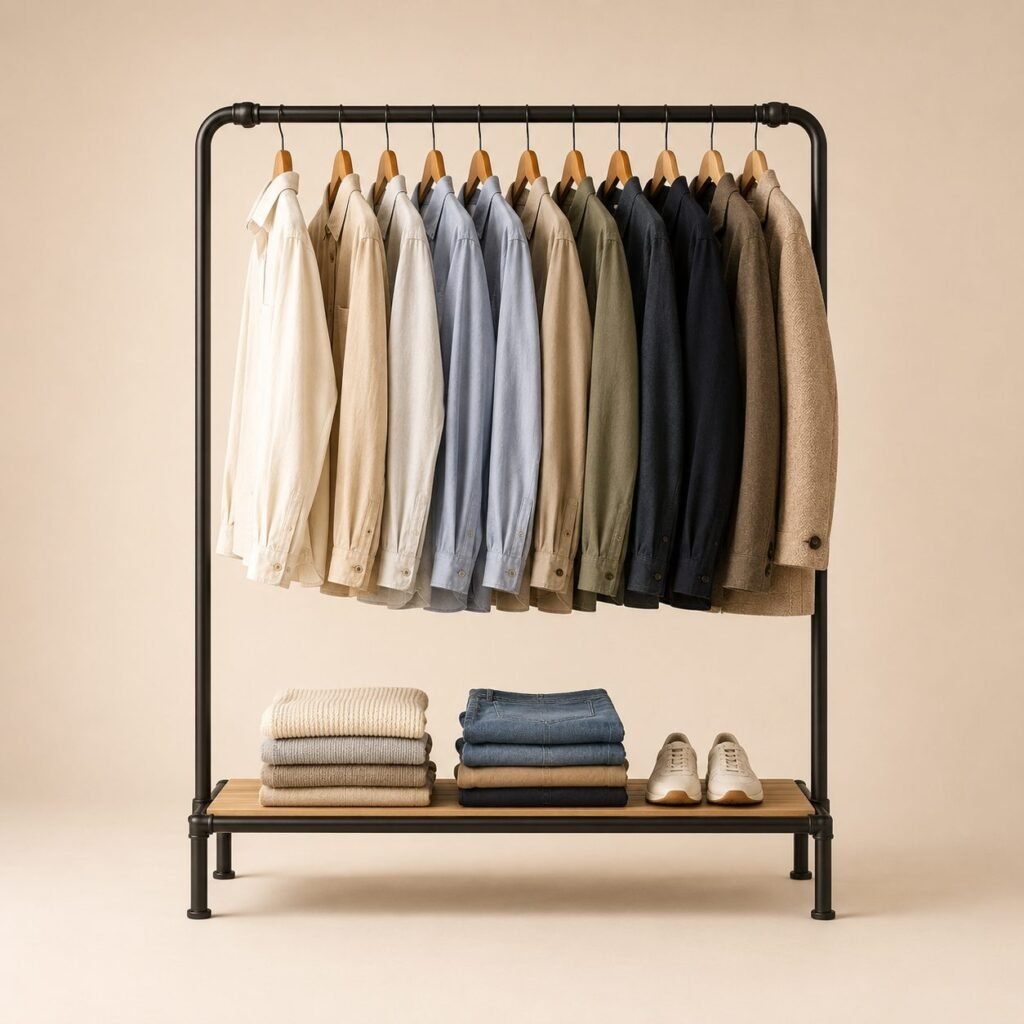
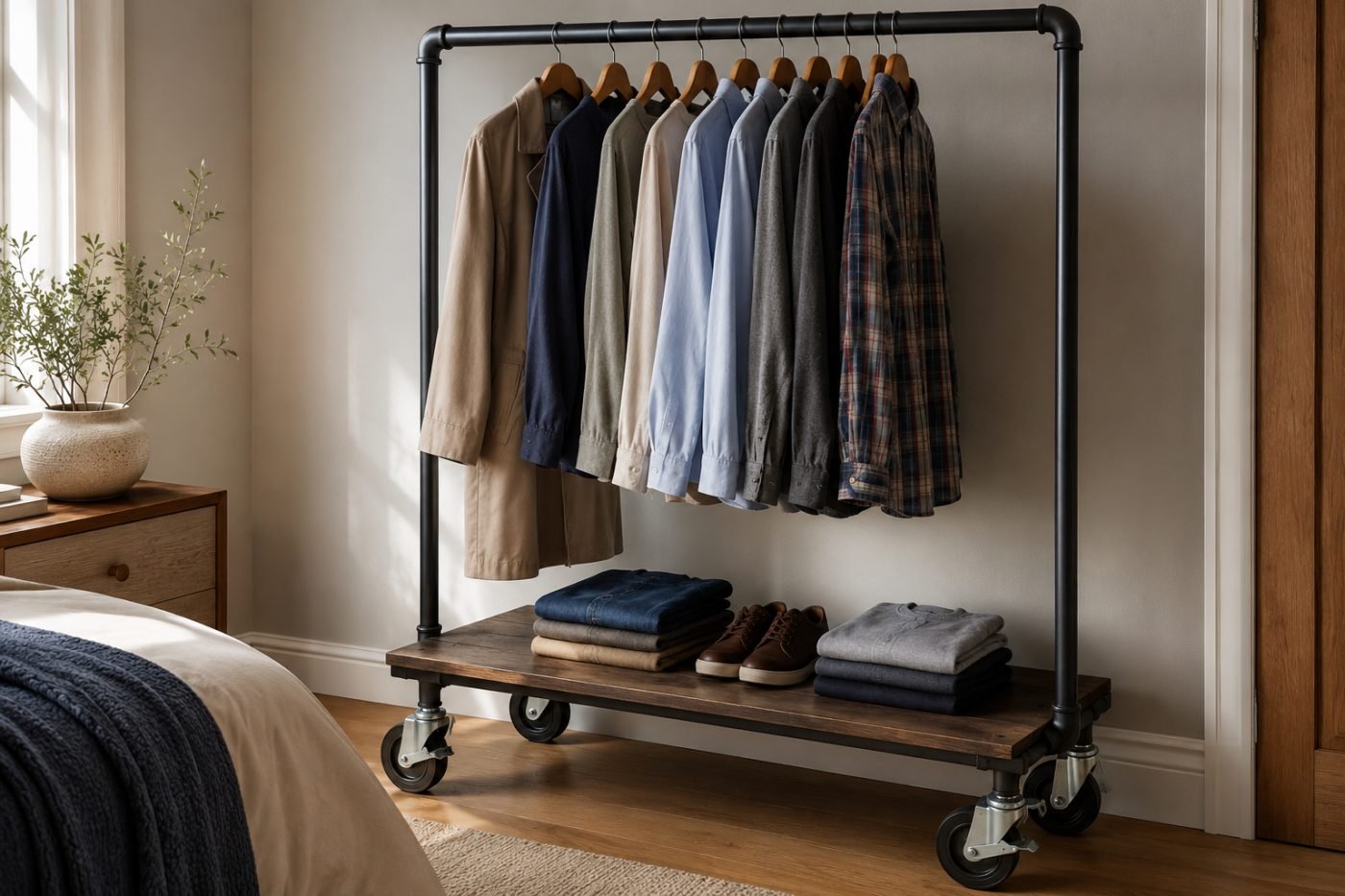
This is the single biggest win, and the one most people get wrong by buying the cheapest option. A garment rack replaces the hanging function of a closet outright, and if you pick one with a lower shelf it handles shoes or folded stacks too.
The mistake is buying a slim chrome retail rack. Those are built for shops, where clothes hang for a day — not for forty shirts sitting on them for a year. They bow in the middle within a few months and the wheels seize up.
What to buy
- Steel construction, not chrome-plated hollow tube
- Stated weight capacity of at least 100 lbs
- Tube diameter of 25mm or more
- Locking wheels, or fixed feet if the floor is uneven
- A bottom shelf — worth the extra ten dollars every time
- 30–40 inches wide fits most walls
Worth it becauseA rated capacity means it will not sag, and the shelf doubles your usable storage from the same footprint.
The catchYour clothes are on display, so this only looks good if you keep it tidy. If that is not you, buy one with a fabric cover.
Filtered to best-selling racks with a bottom shelf. Check the listing states 100 lb or more before you buy — the VICERII and HYSEYY models both qualify.
Under-bed rolling bins
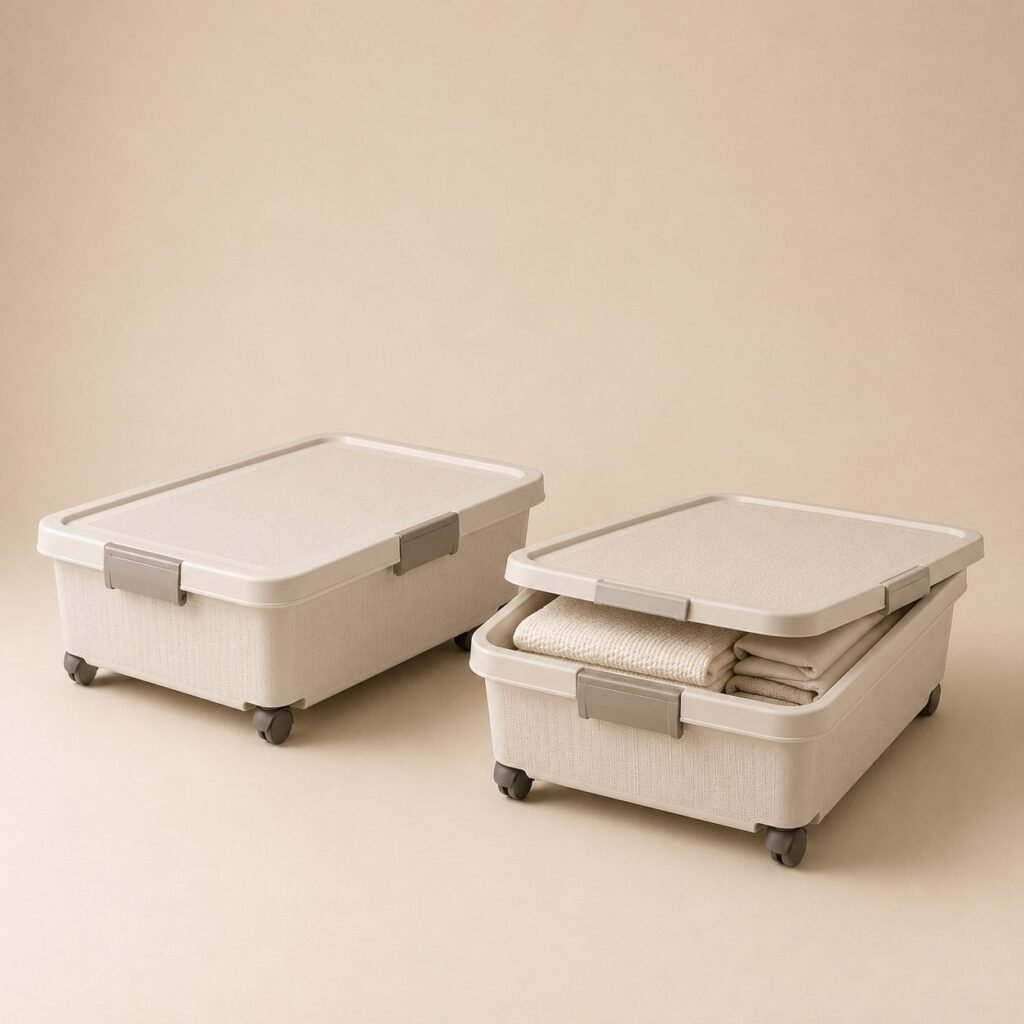
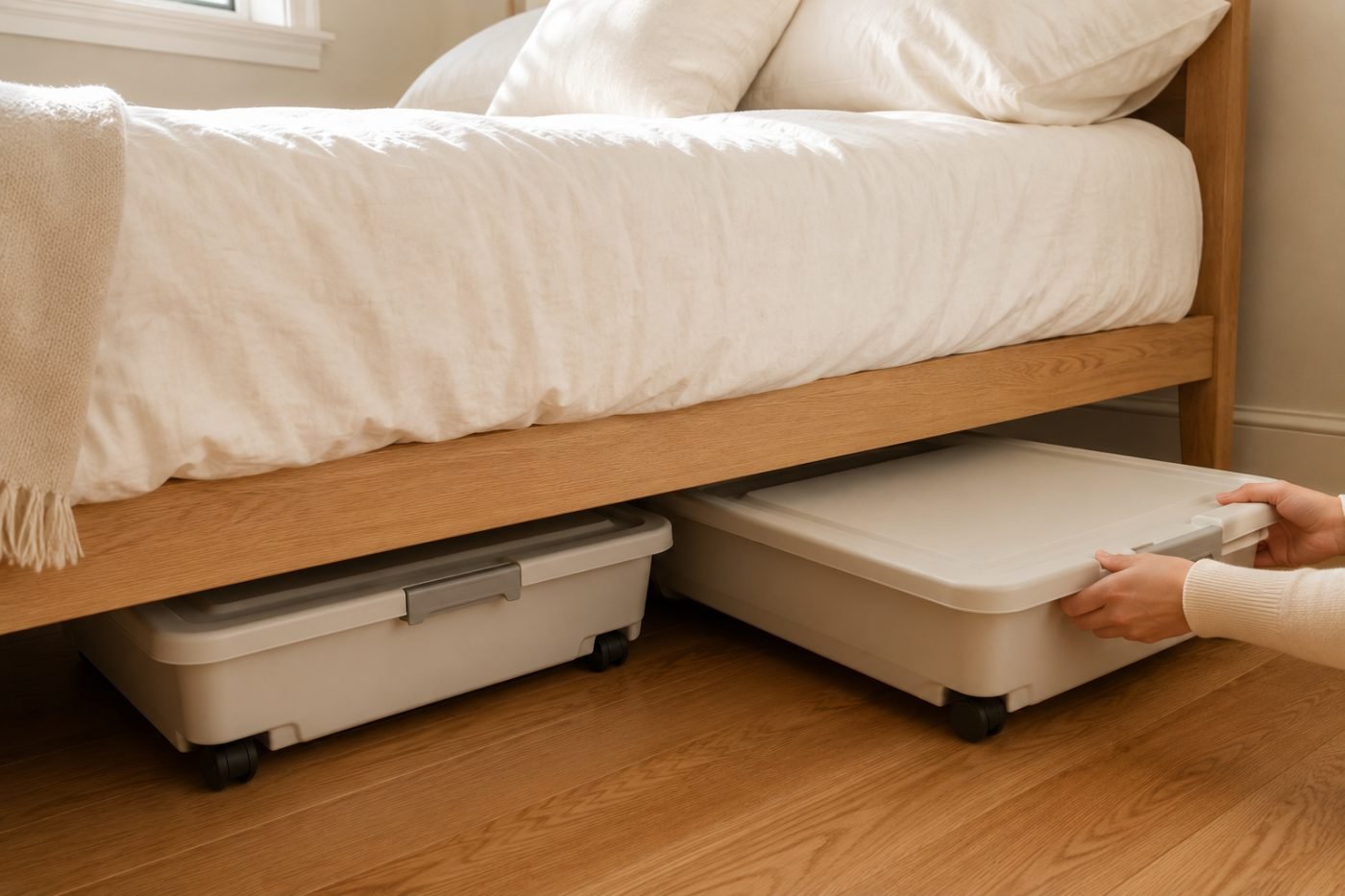
The space under your bed is usually the largest unused volume in the room. Most people either ignore it entirely or shove loose things under there and forget them.
Rolling bins solve both problems with under-bed storage: you can actually reach them, and dust stays out.
What to buy
- Measure clearance first — floor to the underside of the frame, not frame height
- Standard frames give 7–13 inches; buy bins two inches shorter than your gap
- Wheels, not just a pull handle
- A lid that latches rather than rests
- Clear sides or a label window so you are not opening all four
Worth it becauseIt converts genuinely dead space into real capacity for about the price of two takeaways.
The catchNot for anything you need daily. The getting-up-and-pulling-out friction is real, and you will stop bothering.
YAASHEEN 2-Pack — 6.69″ tall so it clears most frames, wheels, clear lids with labels, 72 lb capacity.
Bed risers
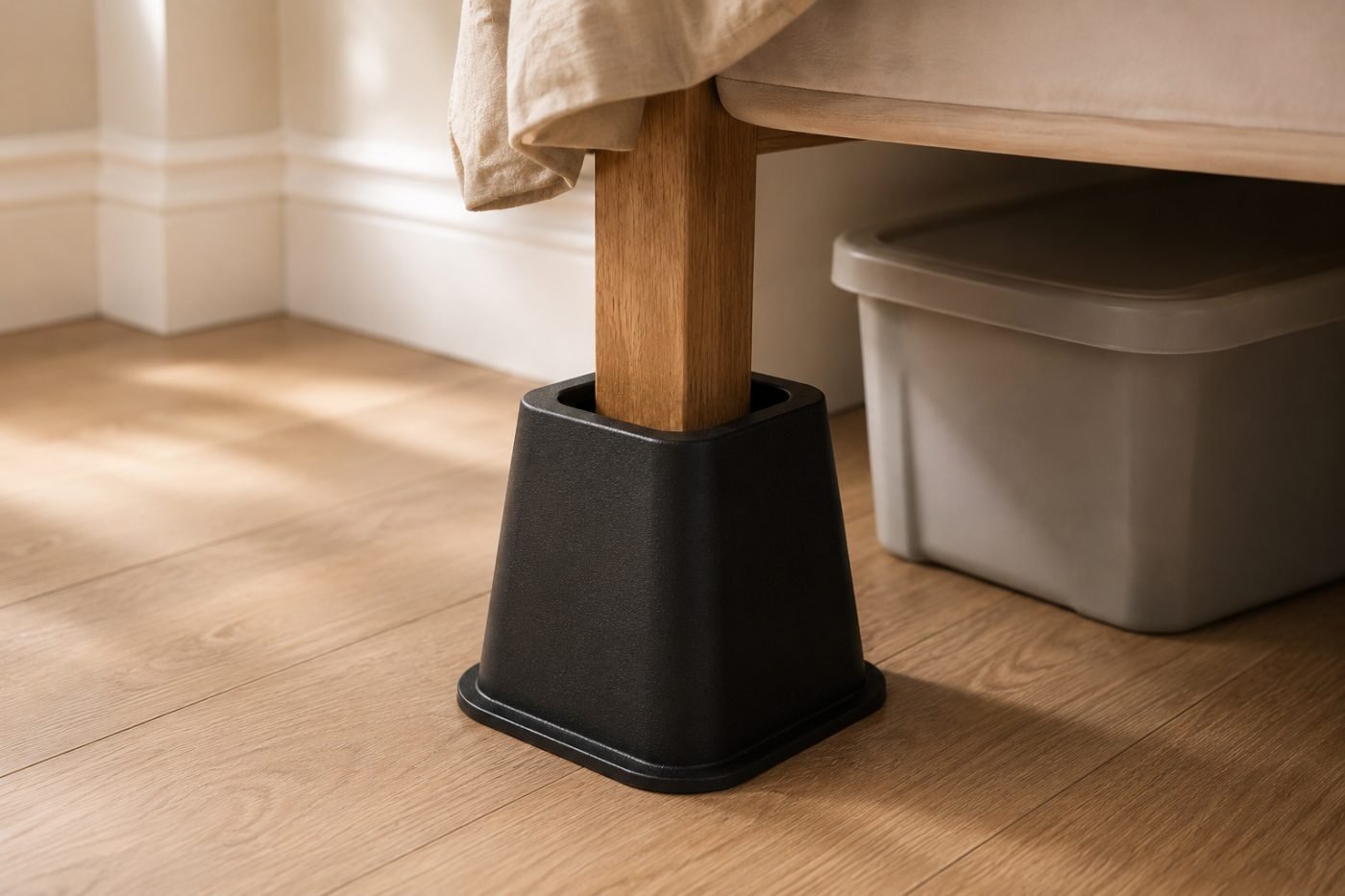
If your bed sits low, the fix above barely works. Risers lift the frame three to eight inches, which sounds minor but often doubles the usable volume underneath.
What to buy
- Match the cup to your leg type — square, round and caster wheels all differ
- Total weight rating that covers bed, mattress and occupants
- Stackable for height options, single-height for maximum stability
- Rubber or felt base if you have wood floors
Worth it becauseCheapest storage-per-dollar on this entire list, by a wide margin.
The catchA taller bed changes how the room reads, and under a low ceiling it can look top-heavy. It also makes getting in and out less comfortable if you are shorter.
Home It Adjustable Risers — stack to 3, 5 or 8 inches, supports 1,300 lb, fits square and round legs.
An over-the-door organizer
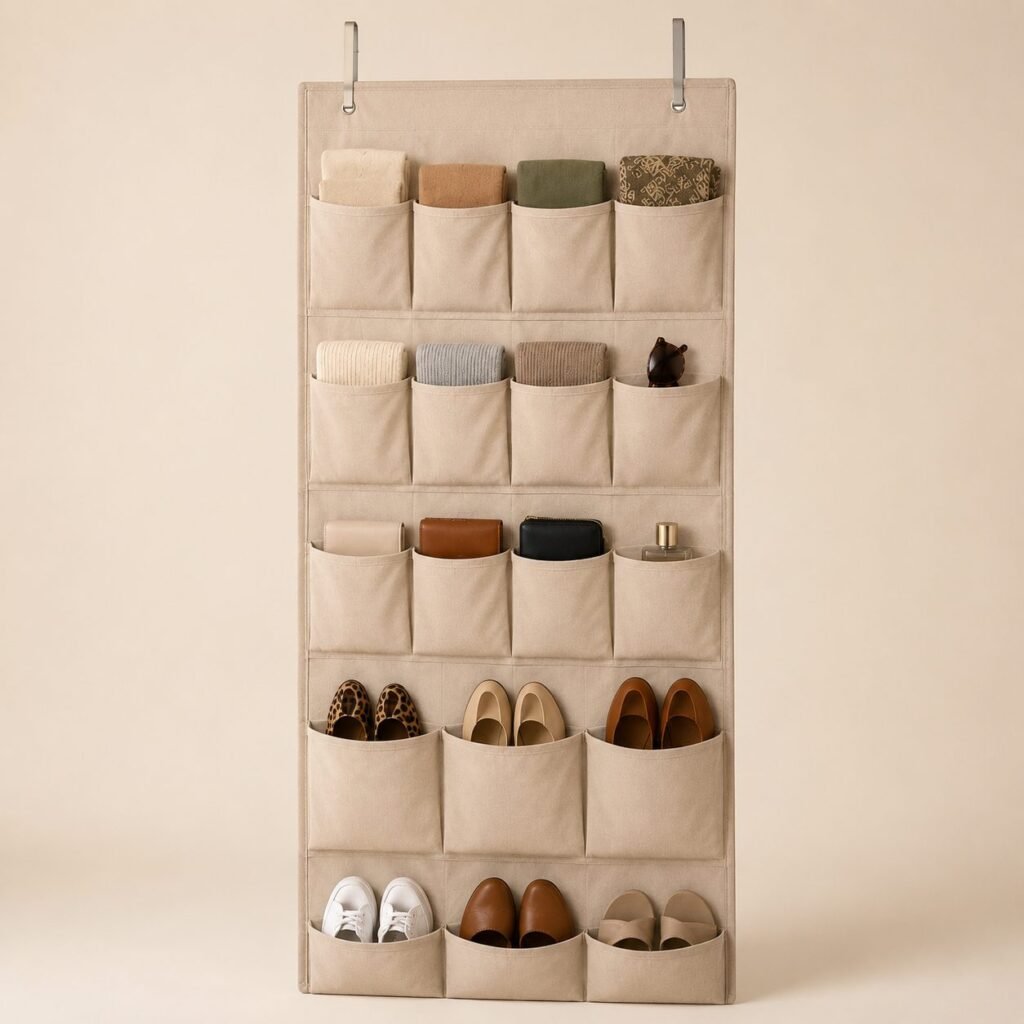
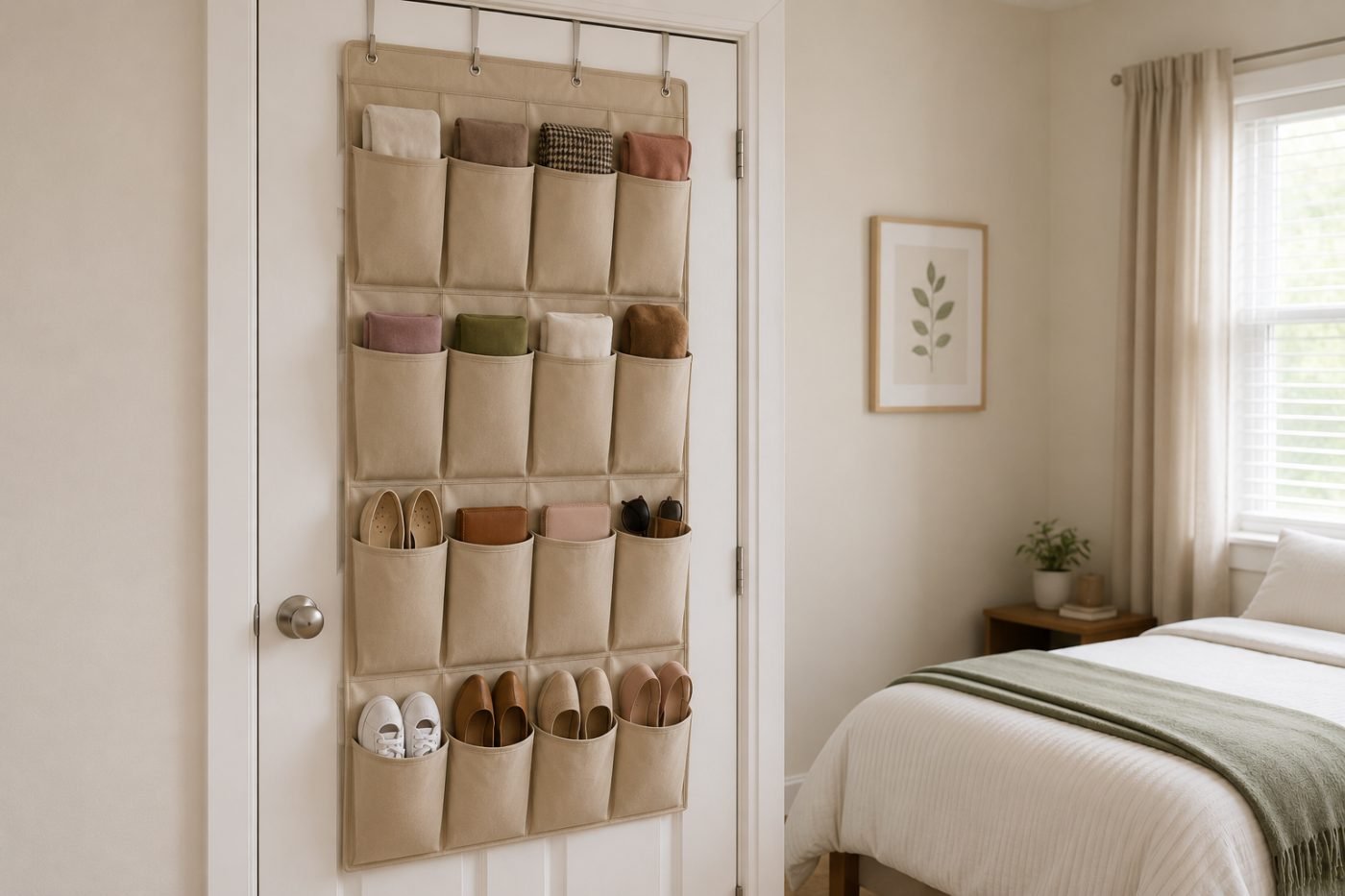
Small items are what make a closet-less bedroom look chaotic — not the big things. A door organizer lifts twenty or more of them off every surface in the room in about four minutes.
Check your door thickness before you buy. Standard interior doors are around 1⅓ inches. Most organizers fit up to 1¾ inches, but cheaper hooks sometimes only fit 1¼. This mismatch is the single most common reason these get returned.
What to buy
- Hook width rated for your measured door thickness
- Fabric or clear pockets rather than wire — quieter, and it will not scratch the door
- 20–24 pockets is the useful range
- Deeper pockets if you are storing shoes rather than accessories
Worth it becauseIt uses a surface that has no other possible purpose.
The catchIf your door opens against a wall, a loaded organizer can stop it opening fully. Check the swing before you commit.
Gorilla Grip 24-Pocket — category best seller, breathable mesh pockets, 40 lb capacity, fits standard doors.
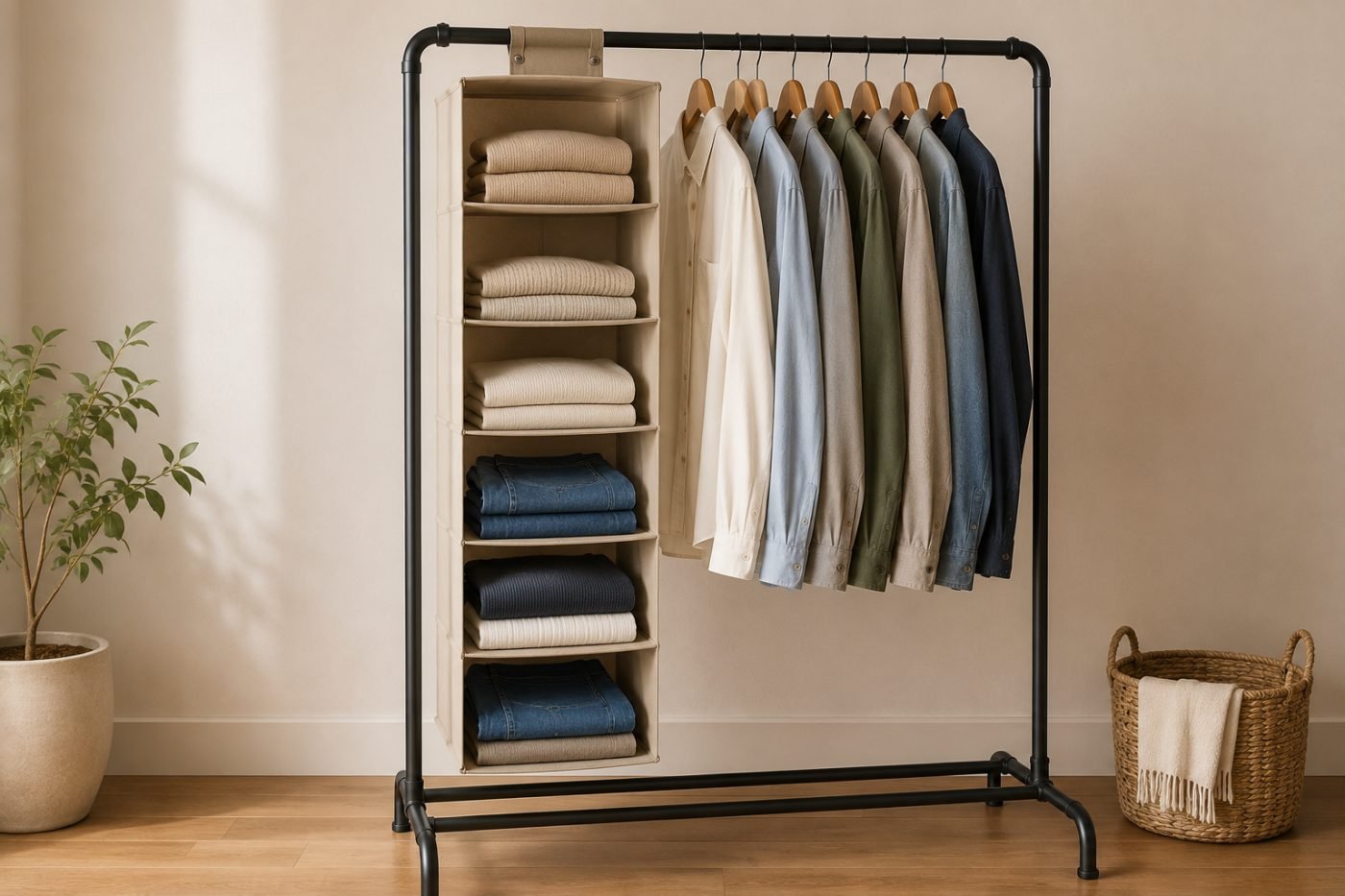
Hanging closet shelves
These are fabric shelf towers that hang from a rod, which means they work on the garment rack from fix one. Five or six compartments for sweaters, jeans and t-shirts — they turn a rack into a rack-plus-dresser without adding furniture.
What to buy
- Reinforced shelves — unreinforced ones sag under folded jeans within weeks
- A rod hook sized to your rack’s tube diameter
- Side straps, so it does not swing every time you take something out
- Six shelves is the sweet spot; ten-shelf versions get unstable
Worth it becauseIt adds folded storage without a single extra inch of floor footprint.
The catchIt occupies roughly twelve inches of hanging rod, so you are trading rack capacity for shelf capacity. Do the maths before you buy.
MAX Houser 6-Tier — six shelves, two reinforced hooks, folds flat when you move.
A tension rod in an alcove
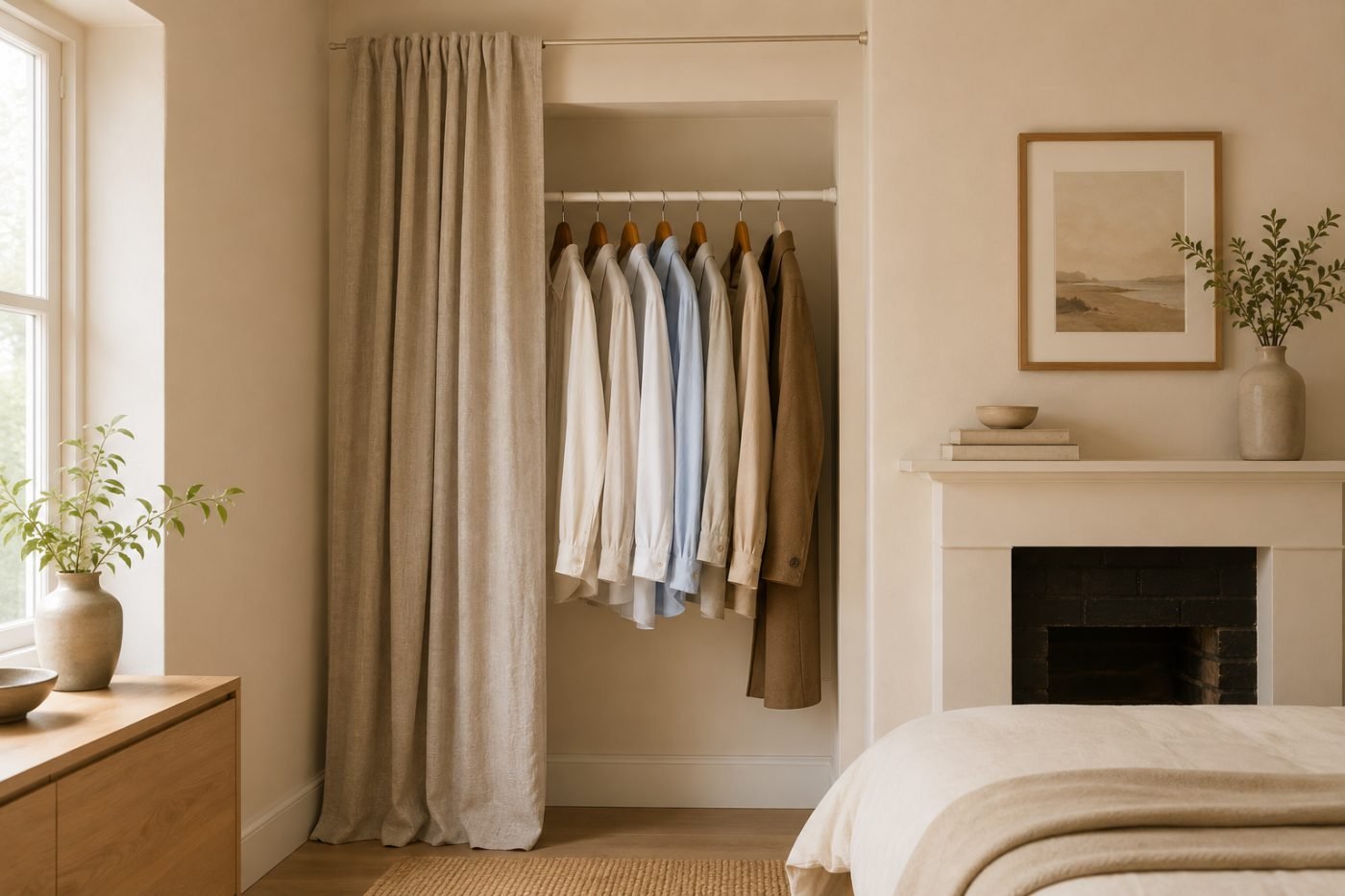
If your room has an alcove — even a shallow one beside a chimney breast — a tension rod turns it into a hanging closet for under twenty-five dollars. Add a curtain on a second rod and you have built a closet with zero permanent fixings.
One warning that matters: a standard spring-loaded shower rod will not hold clothes. It will slip within a week and take your shirts down with it. You need a genuine heavy-duty rod.
What to buy
- Twist-lock or ratcheting mechanism, never spring tension
- Stated capacity above 30 lbs
- Rubber end caps to spread the pressure
- A span range that fits your alcove with a few inches to spare at both ends
Worth it becauseIt creates a genuine hanging closet out of space that was doing nothing.
The catchOver months, pressure can mark the paint at the contact points. Rubber caps reduce this but do not eliminate it — worth knowing before a deposit inspection.
Filtered to no-drill tension rods rated 60 lb+. Avoid anything described as spring tension — it will slip.
A storage bench or ottoman
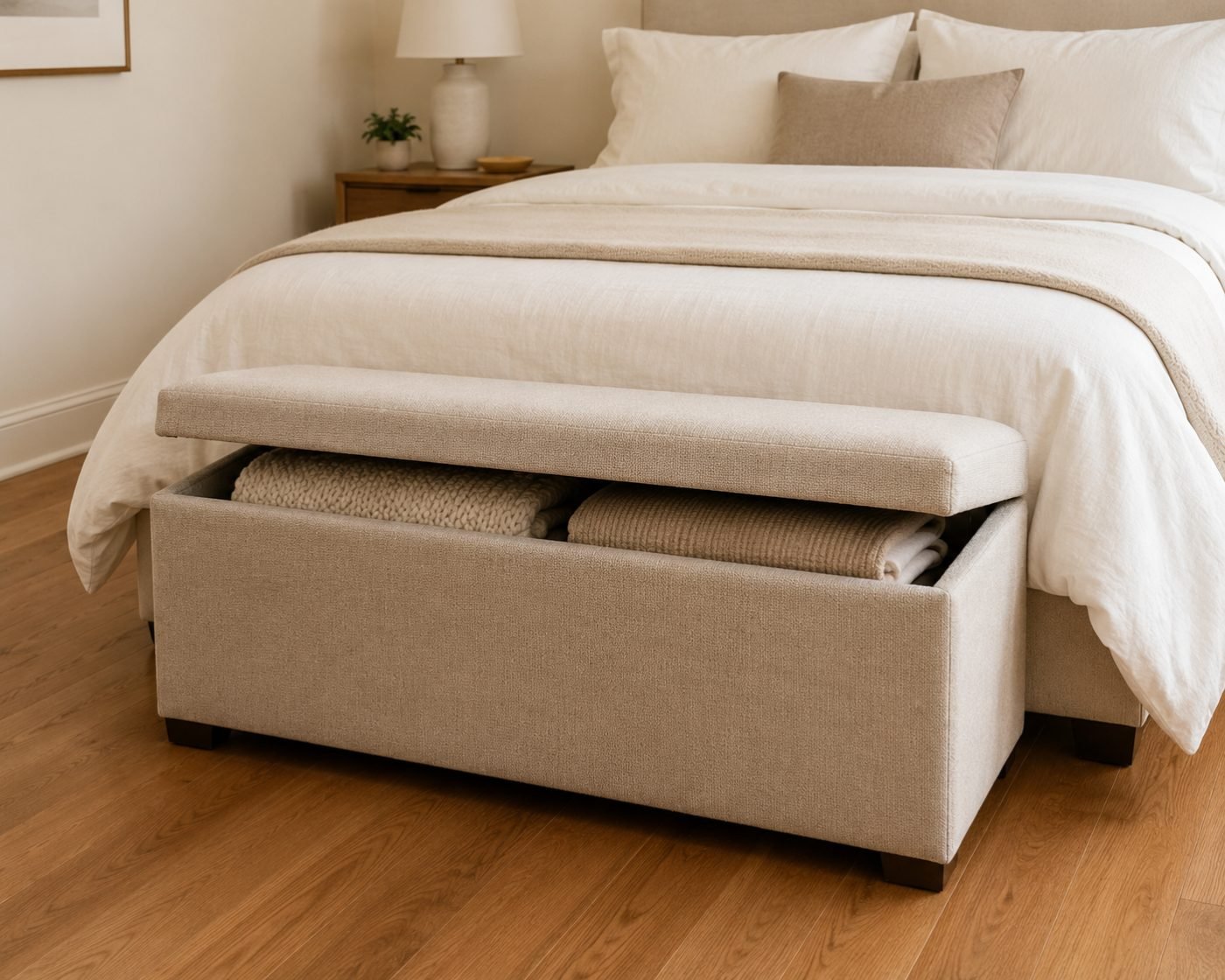
The only piece on this list that does two jobs. It swallows the bulky things that fit nowhere else, and gives you somewhere to sit while putting on shoes — which is the other thing a closet-less bedroom usually lacks.
What to buy
- A hinged lid with safety hinges so it does not slam shut
- Internal capacity stated in cubic feet or litres, not just outer dimensions
- A frame rated to hold your weight seated, not just static load
- Fabric rather than faux leather — it reads softer in a bedroom
Worth it becauseIt is the only fix here that handles genuinely bulky items without hiding them under something.
The catchMost expensive item on this list, and it uses floor space. Only worth it if you actually have bulk to store.
Filtered to benches with a safety hinge and a stated load rating. Check internal capacity, not just outer size.
A wall of adhesive hooks
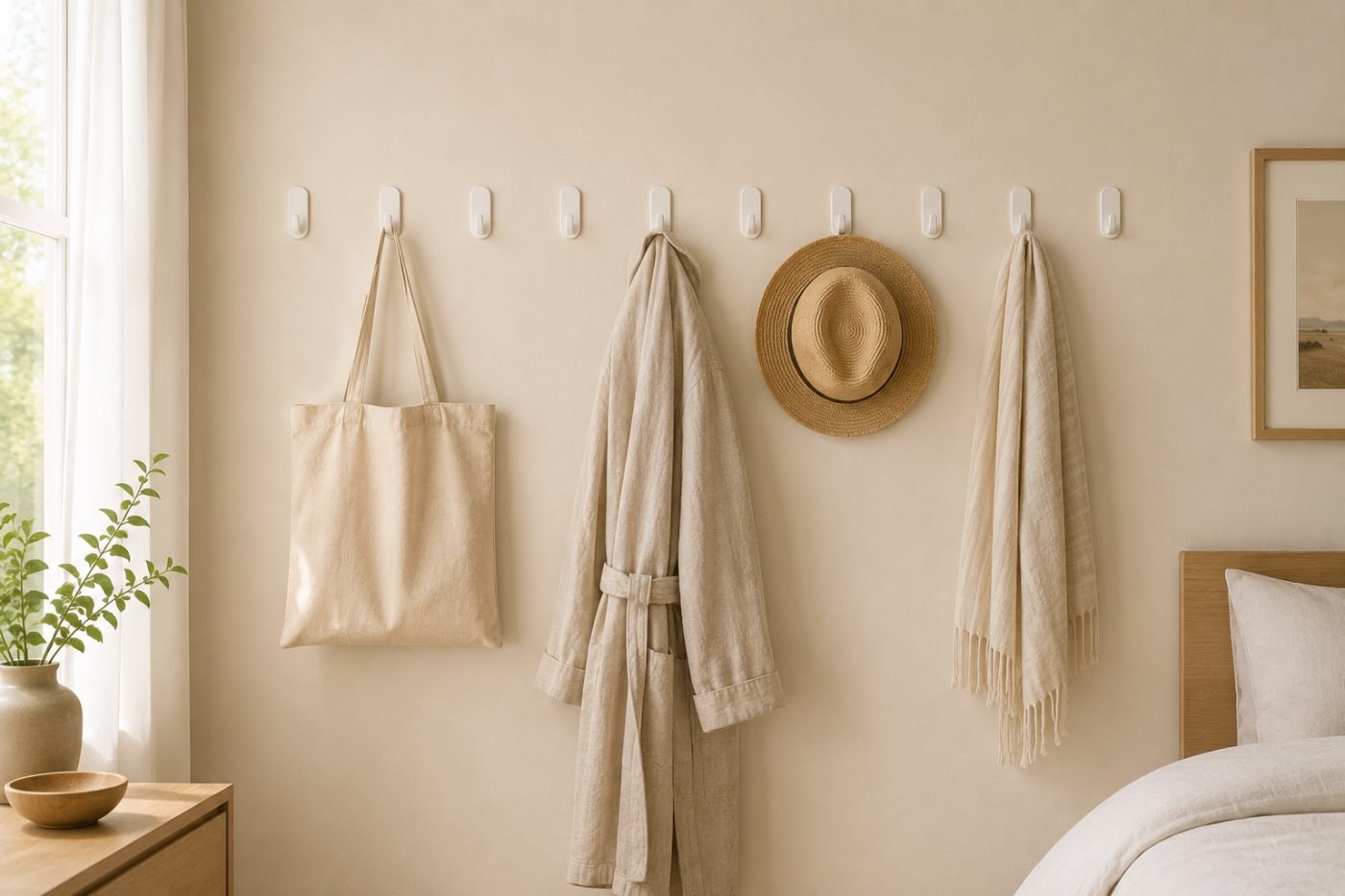
Eight to twelve hooks in a row along one wall handles everything you do not want to fold and do not want on the chair. It is the cheapest fix here and the fastest to install.
The deposit warning: adhesive hooks pull paint off if the paint is fresh, low quality, or matte. Paint needs roughly thirty days to fully cure. Never apply them to textured walls, wallpaper, or anything painted in the last month. When you remove them, pull the tab straight down and slowly — pulling outward is what takes the paint with it.
What to buy
- A stated weight rating that comfortably exceeds what you plan to hang
- A removal tab — hooks without one are the ones that damage walls
- Matte white or brushed metal, so the hooks disappear against the wall
- Buy one pack first and test a single hook for a week before committing to twelve
Worth it becauseIt costs almost nothing and takes ten minutes.
The catchThe paint risk is real. If your walls were painted recently, skip this one entirely and put the money into the garment rack.
Filtered to hooks with a removal tab and a printed weight rating. Test one for a week before you mount twelve.
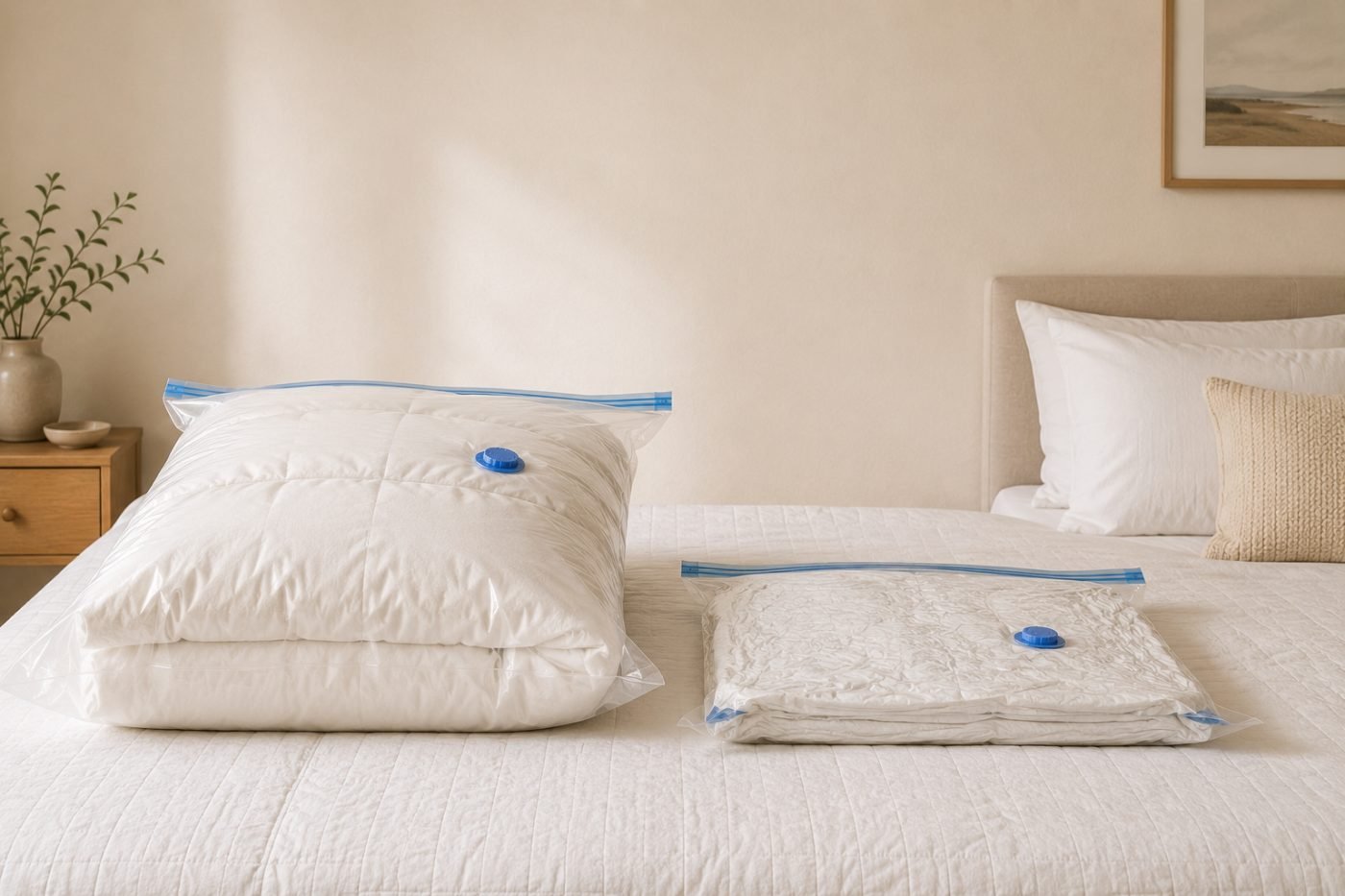
Vacuum storage bags
Not storage, exactly — compression. A vacuum bag shrinks a winter duvet to roughly a third of its size, which is what makes fixes two and seven actually sufficient rather than nearly sufficient.
What to buy
- A double-zip seal — single-zip bags leak air over a few weeks
- A one-way valve that fits a standard vacuum hose
- A hand pump included, in case you do not own a vacuum
- Mixed sizes rather than all-large, so you are not half-filling bags
Worth it becauseIt is a multiplier. It makes every other solution on this list hold noticeably more.
The catchDo not compress down jackets or feather duvets for longer than a season. Down loses loft when it stays compressed, and it does not always come back.
Filtered to variety packs with a hand pump included. Mixed sizes beat all-jumbo — you will not half-fill them.
Four storage mistakes that cost renters money
A rack rated for 60 lbs will sag under a full wardrobe. Coats alone can hit 40 lbs. Look for 100 lbs or more and you will never think about it again.
Interior doors, closet doors and exterior doors are all different thicknesses, and the hooks are sized for a narrow range. Measure first. This is the most-returned item in the category by some distance.
People measure the bed frame height instead of the gap from floor to the underside of the frame. Those are different numbers. Measure the gap, then subtract two inches.
If the room was painted in the last month the paint has not cured, and the hook will take a patch of it with it when it comes off. That is a deposit deduction caused by a fifteen-dollar item. Wait, or go freestanding.
No-closet bedroom questions, answered
Can I build a closet in a rental?
Generally not without written landlord permission, because it counts as a permanent alteration. A freestanding wardrobe or a garment rack gives you comparable hanging capacity, costs a fraction as much, and leaves with you when you move.
How much weight can a clothing rack hold?
It depends entirely on build quality. Slim chrome retail racks often max out around 50 to 60 lbs. Steel racks with thicker tubing are commonly rated between 100 and 200 lbs. Check the stated rating rather than assuming, and bear in mind that a full wardrobe of coats and jeans weighs more than people expect.
How do I store clothes without a closet?
Split them by how often you wear them rather than by type. Daily items go on a garment rack or hooks where you can see them. Weekly items go into hanging shelves or a dresser. Seasonal items go into vacuum bags inside under-bed bins. The common mistake is treating every garment the same way.
Do adhesive hooks damage paint?
They can. On fully cured, good-quality paint, removed correctly by pulling the tab straight down, they usually come away clean. On fresh paint, matte finishes, textured walls or wallpaper, they frequently take paint with them. If you are unsure, do not risk it.
What if I have almost no floor space at all?
Skip the rack and the bench entirely. Build your storage around the over-door organizer, hanging shelves on a tension rod, adhesive hooks and under-bed bins. None of those four use floor area, and together they cover most of what a small wardrobe holds.
The takeaway: three pieces beat one wardrobe
You do not need a closet. You need three things doing different jobs: something that hangs, something that holds bulk out of sight, and something that catches the small items before they reach a chair.
If you buy one thing, make it the garment rack. If you buy three, add under-bed bins and a door organizer. That combination costs less than a single piece of bedroom furniture, gets you most of the way to a real wardrobe, and leaves nothing behind to explain at your final inspection.
Products You Might Like