Modern Farmhouse Style Guide
Warmth, texture, and the quiet confidence of a well-lived home.
Warmth, texture, and the quiet confidence of a well-lived home.
Modern farmhouse design balances rustic warmth with clean contemporary lines. It is a style defined by shiplap walls, barn doors, apron sinks, and an abundance of natural wood and linen — but always with a modern restraint that keeps it from feeling nostalgic. The result is a home that is both genuinely comfortable and visually considered: a place where the aesthetic serves the life lived in it, rather than the other way around.
What Is Modern Farmhouse Design?
Modern farmhouse is not the same as traditional farmhouse style. Where traditional farmhouse interiors can feel heavy and accumulated — too many antiques, too much pattern, too much of everything — the modern version applies an editing eye to the same material vocabulary. It takes the warmth and honesty of the original style and strips away the clutter, leaving something that feels fresh and liveable.
The style emerged in America but has since spread globally, resonating with homeowners who want warmth and character without the formality of traditional design or the coldness of pure minimalism. It sits in a comfortable middle ground that most people find genuinely easy to live with.
Key Principles of Modern Farmhouse Design
A neutral palette of whites, creams, and warm greys forms the background of almost every modern farmhouse interior. These are not cold, clinical whites — they are the warm whites of limewash plaster, aged linen, and sun-bleached wood. The palette is deliberately restrained, allowing texture and material to do the work that colour does in other styles.
Reclaimed wood and aged metals are the materials that give the style its authentic character. Exposed ceiling beams, salvaged wooden flooring, a dining table made from a single plank of reclaimed oak — these elements carry history and imperfection in a way that new materials simply cannot replicate. The warmth they bring to a room is both visual and physical.
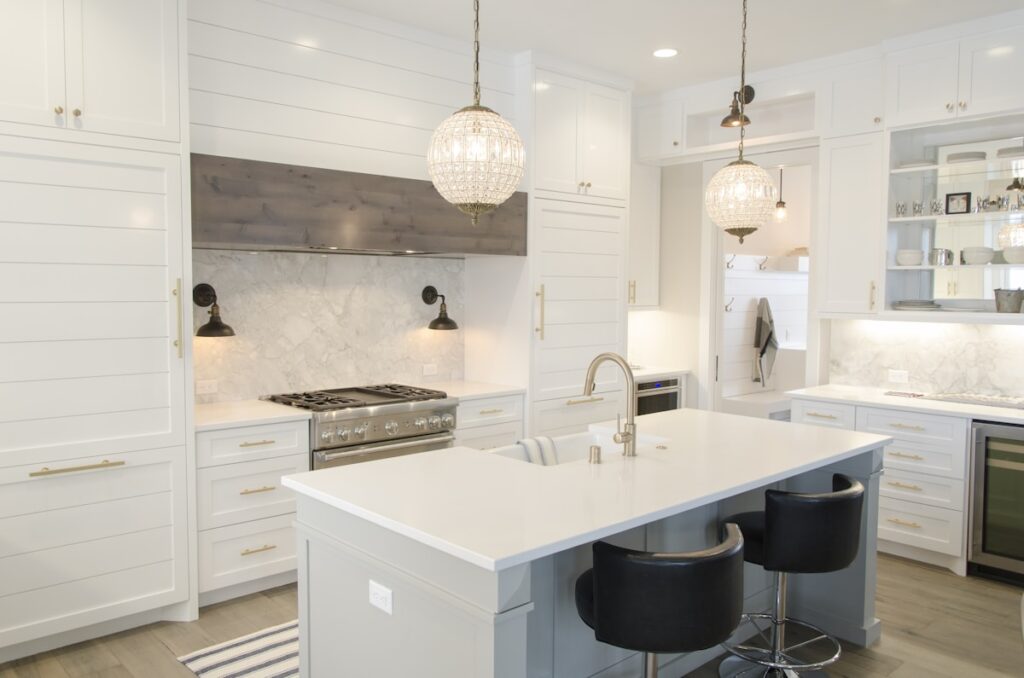
Shiplap and board-and-batten walls are among the most recognisable details of the modern farmhouse aesthetic. Applied to a single accent wall or used throughout a space, these architectural treatments add texture and depth without introducing pattern or colour. They break up flat plasterwork and give rooms a sense of craft and intention.
Functional furniture with clean lines distinguishes the modern farmhouse from its more decorative predecessors. Pieces are chosen for their utility as much as their appearance. A large kitchen table that can seat ten. An apron-front sink. Open shelving that displays what is actually used rather than what is merely decorative. This honest relationship between form and function is central to the style.
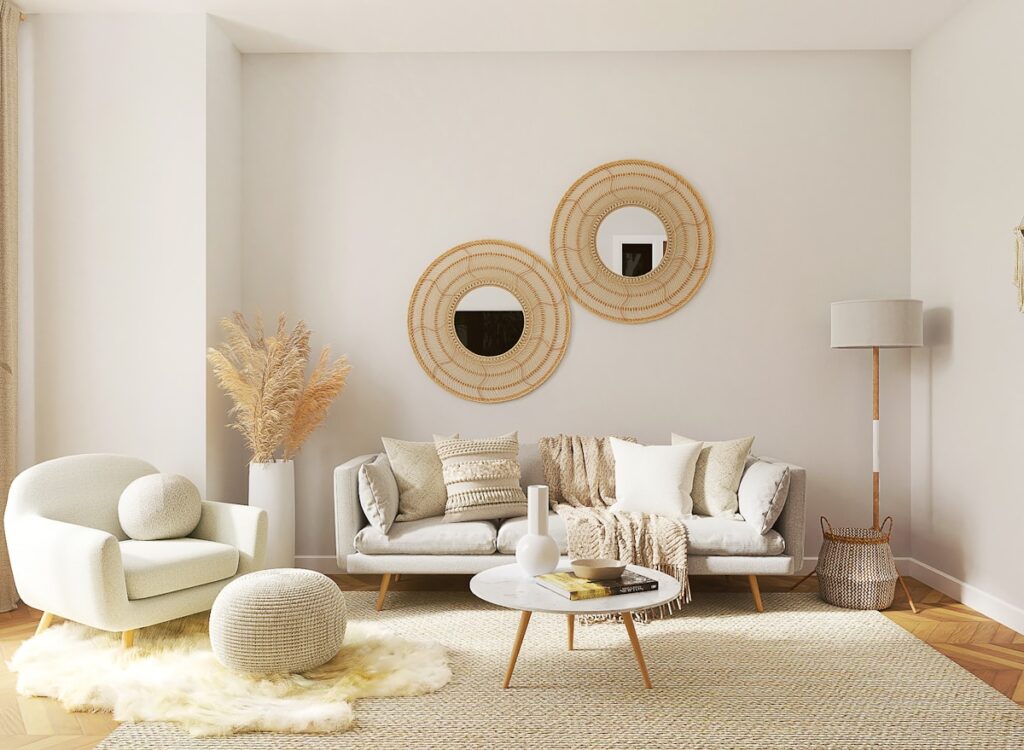
Layers of texture through throws, baskets, and ceramics complete the warm, tactile quality that makes modern farmhouse interiors so liveable. A chunky knit throw over a linen sofa. A collection of handmade mugs on open shelving. A woven basket used for storage beside the fireplace. These elements are simple and unpretentious — which is precisely their appeal.
Bringing Modern Farmhouse Into Your Home
You do not need to renovate a room from scratch to introduce modern farmhouse character. The simplest interventions often have the greatest impact: replacing a light fixture with something in black iron or aged brass, covering a wall in shiplap cladding, or repainting cabinets in a warm off-white. Each of these changes moves a room convincingly toward the aesthetic without major disruption.
For those approaching a new build or a significant renovation, the principles are clear. Prioritise natural materials. Favour simple, honest forms over ornate ones. Choose a restricted palette and let texture create interest within it. And above all, design for the life you actually live rather than the one you imagine you might live one day.
Modern farmhouse design, at its best, produces homes that feel genuinely inhabited. Not styled for a photograph, but arranged for a family. That is its lasting appeal, and why it continues to resonate so widely.
Products You Might Like