7 Living Room Ideas That Make Small Spaces Feel Enormous
Small living rooms do not have to feel cramped. With the right furniture, lighting, and layout choices, even the tiniest space can feel open, airy, and genuinely livable.
Small living rooms do not have to feel cramped. With the right furniture, lighting, and layout choices, even the tiniest space can feel open, airy, and genuinely livable.
There is a particular kind of frustration that comes with a small living room. You have ideas. You have a Pinterest board. You have approximately 280 square feet and a sofa that takes up most of it.
But here is what most interior guides get wrong: they treat small spaces as a problem to solve. We think of them differently. Small living rooms are an exercise in intention. Every piece you choose has to earn its place. And when you get it right, the result is not just functional — it feels curated, considered, and completely yours.
Here are seven ideas that genuinely work.
1. Choose One Statement Piece and Build Around It
The mistake most people make in a small living room is trying to fit everything in. A large sofa, a coffee table, a media unit, two armchairs, a bookcase. The room becomes a furniture showroom instead of a place to live.
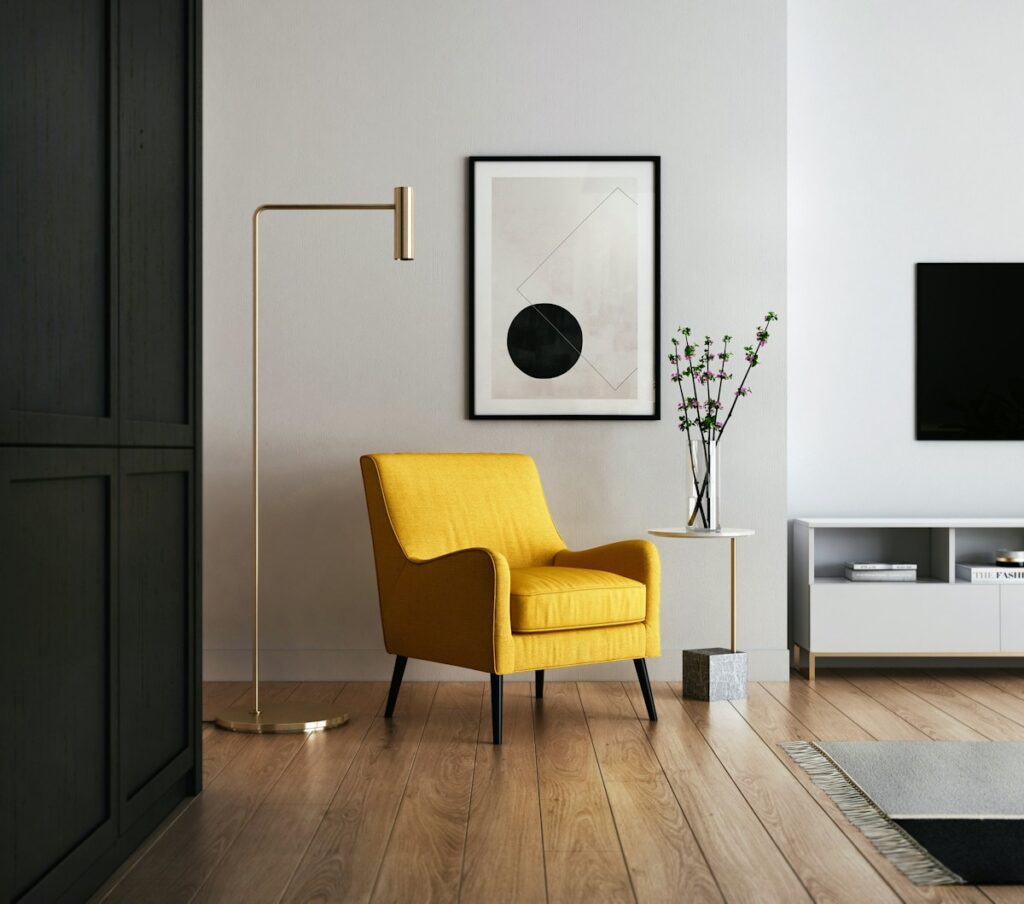
Pick one piece you love — truly love — and let it lead. A beautiful curved sofa in a warm bouclé. A sculptural coffee table in travertine. A vintage rattan armchair you found at a market. One great piece anchors the room and gives everything else permission to be simpler.
2. Use Vertical Space Aggressively
Floor space is limited. Wall space is not. Floor-to-ceiling shelving draws the eye upward, making the room feel taller, which in turn makes it feel larger. Built-in shelving looks expensive and takes up less visual space than freestanding units because it sits flush with the wall.
If built-ins are not an option, tall freestanding shelves work well too — just anchor them to the wall for safety. Style them with a mix of books, objects, and negative space. Not every shelf needs to be full.
3. Let the Light In — All of It
Natural light is the most powerful tool in a small room. If you have windows, treat them like the asset they are. Keep window treatments light and simple. Sheer linen curtains hung close to the ceiling and wide enough to clear the window frame when open will make the window look larger and flood the room with light.
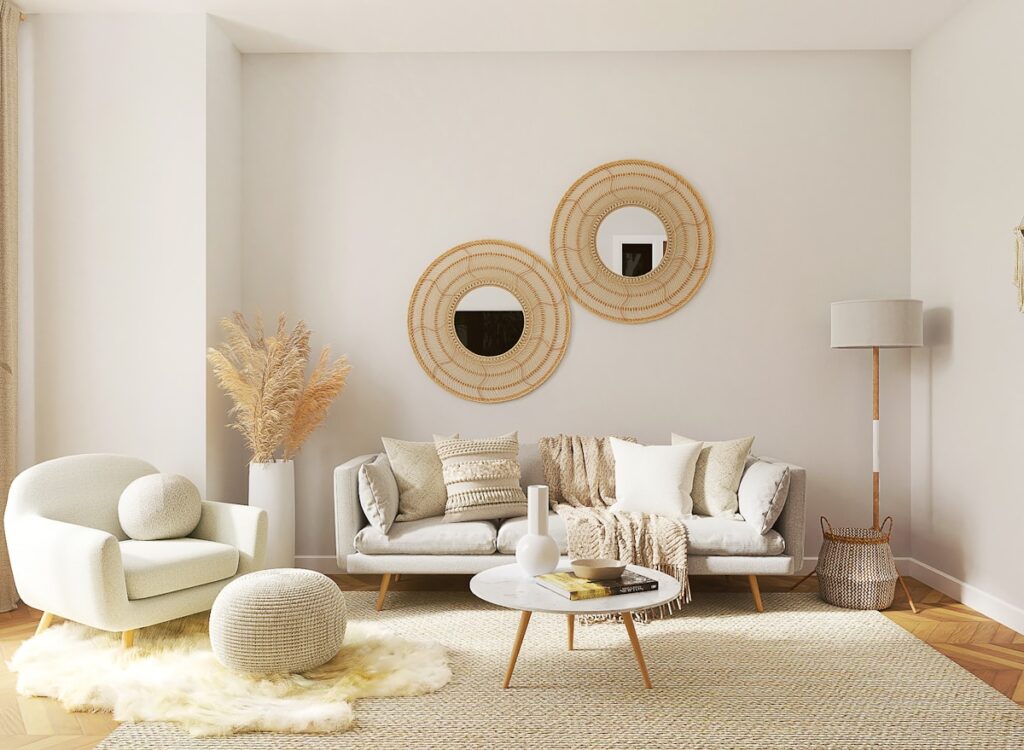
Mirrors placed opposite or adjacent to windows bounce light around the room. A large mirror leaning against a wall is an easy, affordable way to add perceived depth to any living space.
4. Think About the Rug First
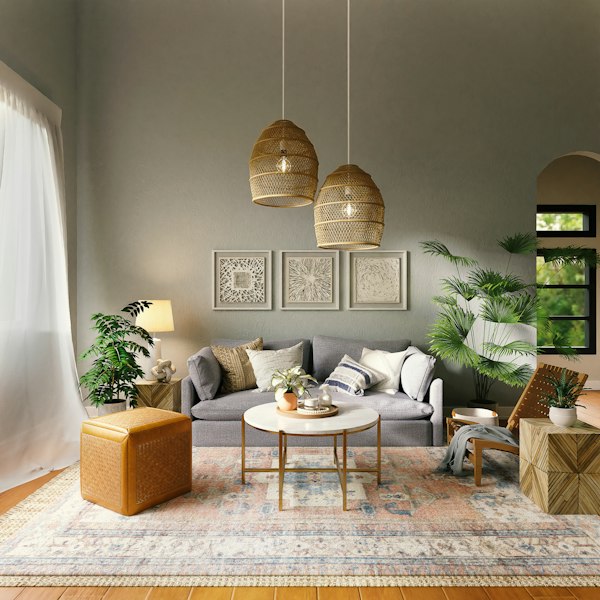
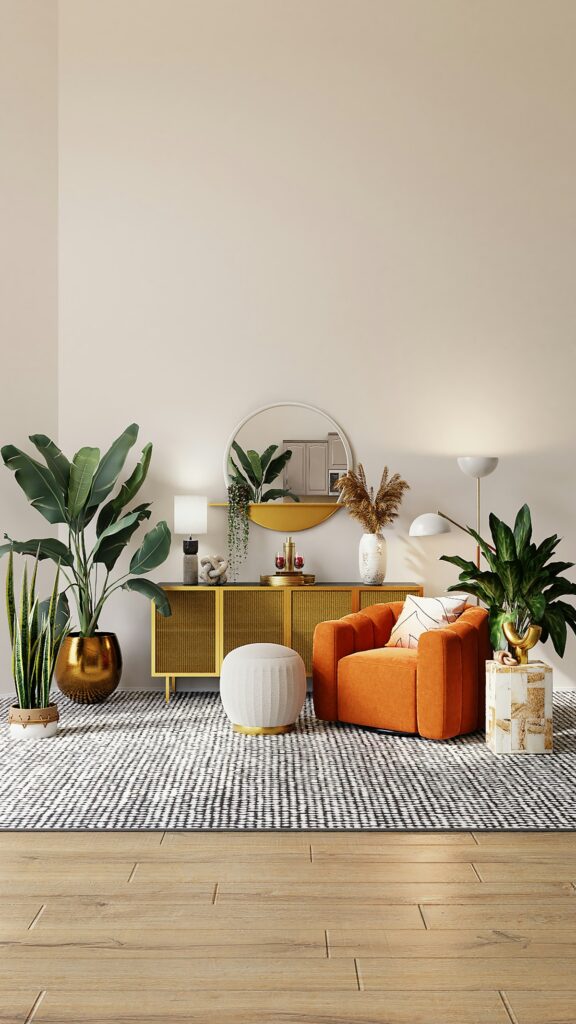
Most people buy rugs that are too small. A small rug in the middle of a room makes the space feel choppy and disconnected. A large rug that extends beneath all the main furniture — or at least the front legs — unifies the seating area and creates the impression of a larger footprint.
In a small living room, a large, simple rug in a neutral tone does more for the space than almost any other single purchase. Natural fibres like jute or wool age beautifully and never go out of style.
5. Embrace Multipurpose Furniture
A storage ottoman that doubles as a coffee table. Nesting side tables that tuck away when not needed. A sofa with a chaise that can be moved to extend the seating arrangement. These are not compromises — they are smart choices that give a small room genuine flexibility.
The best multipurpose furniture does not look like multipurpose furniture. It just looks good. Invest a little more in pieces that earn their place twice over.
6. Keep the Colour Palette Cohesive
This does not mean everything has to be beige. It means the colours in your room should feel like they belong to the same family. Warm tones — creams, terracottas, ochres, dusty pinks — work particularly well in small spaces because they feel enveloping rather than expansive.
Choose two or three base colours and repeat them throughout the room in different textures and materials. A terracotta cushion, a rust-toned throw, a warm amber in the glassware on your shelves. Repetition creates rhythm, and rhythm makes a space feel intentional.
7. Edit. Then Edit Again.
The final and possibly most important idea is this: small spaces reward restraint. Walk into your living room and ask yourself which pieces you would genuinely miss if they were gone. Everything else is a candidate for removal.
This is not about minimalism for its own sake. It is about making room — literally and figuratively — for the things that matter. A small living room with ten pieces you love feels more spacious than a large one crammed with thirty things you are indifferent to.
Start there. The rest follows.
The Bigger Picture
Small living rooms are not a consolation prize. Some of the most beautiful, characterful, genuinely livable rooms we have ever seen have been compact ones. The constraint forces you to be specific about what you want, which is often where the best design decisions come from.
Take the time. Make the edits. Choose the one piece you love. The room will respond.
Products You Might Like