Small Room, Big Impact: How to Make Every Square Foot Count
Transforming compact rooms into layered, liveable worlds.
Transforming compact rooms into layered, liveable worlds.
Small rooms have a reputation they do not entirely deserve.
Walk into a poorly designed large room and it can feel cold, disconnected, and somehow empty despite being full of furniture. Walk into a well-designed small room and it can feel like the most comfortable, considered, and intimate space in the whole building.
The difference is not the square footage. It is the thinking.
The First Rule: Stop Fighting the Room
Most people approach a small room as a problem to be solved. They look for tricks and hacks — mirrors to create the illusion of space, furniture pushed to the walls to maximise floor area, light colours to make everything feel bigger.
Some of these work. But the framing is wrong. A small room is not a failed version of a large room. It is a different kind of space with its own qualities — intimacy, warmth, focus, the particular satisfaction of a room where everything is within reach.
The best small rooms lean into what they are. They do not pretend to be something else.
Proportion Is Everything
The single most common mistake in small room design is furniture that is too large for the space. Not by much — just enough that the room never quite breathes. A sofa that is two feet too long. A dining table that leaves no room to pull a chair out properly. A bed that takes up so much floor space the room functions but never feels good.
Measure everything before you buy anything. Then measure again. Lay it out on the floor with masking tape if you need to. The time spent on this will save significant money and frustration.
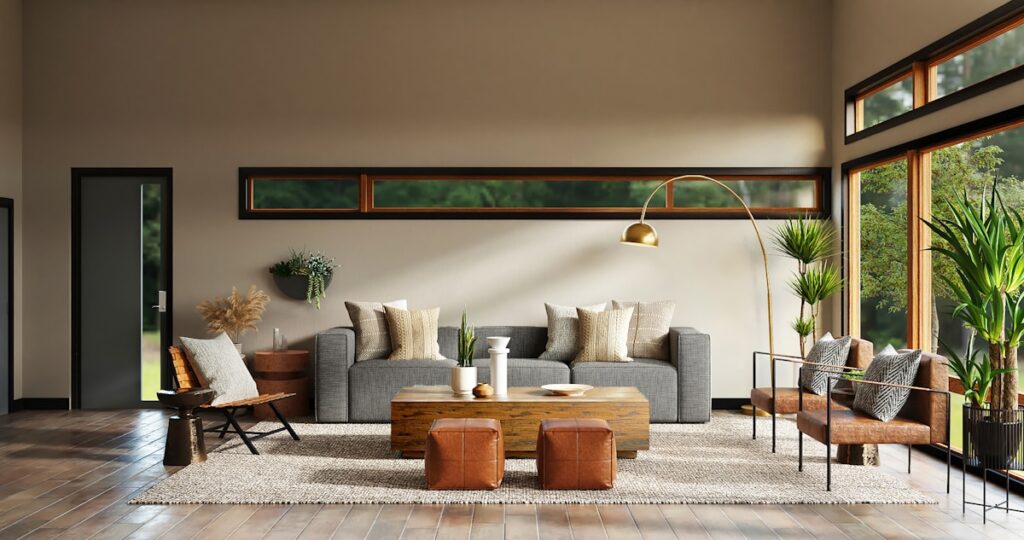
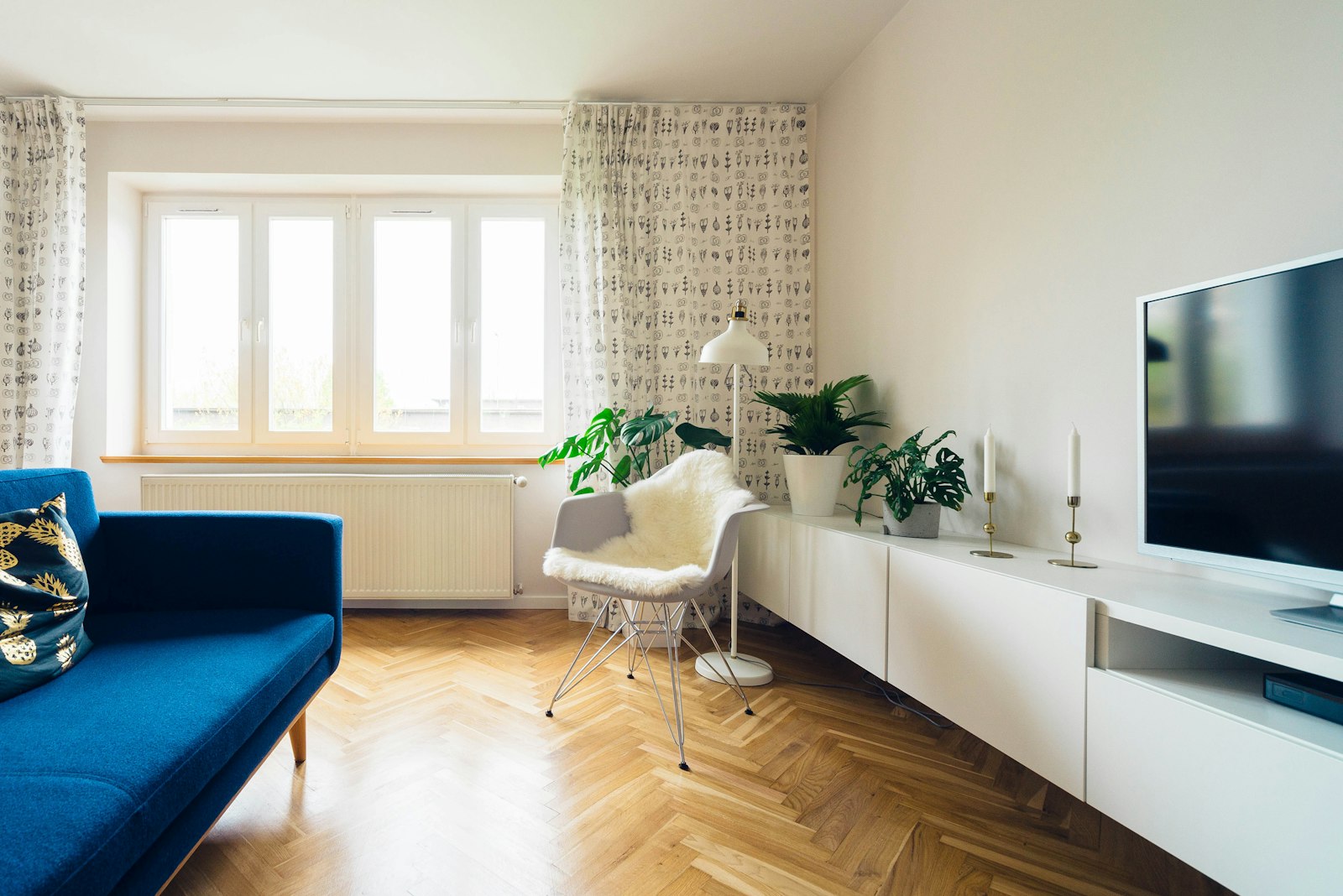
Consider furniture with legs rather than pieces that sit on the floor. A sofa or sideboard raised on legs allows you to see under it to the floor beyond, which creates a sense of visual continuity and makes the room feel larger. Heavy pieces that sit flat on the floor chop a room into sections.
The Vertical Dimension
Most people design horizontally. They think about floor space, room to move, furniture footprints. But small rooms often have good ceiling height that goes almost entirely unused.
Shelving that runs from floor to ceiling uses vertical space efficiently and draws the eye upward, which makes a room feel taller. Curtains hung from as close to the ceiling as possible create the same effect — they suggest that the windows are larger than they are and that the ceiling is higher.
A tall piece of furniture — an armoire, a floor lamp, a large plant — anchors the vertical dimension of a room in a way that low furniture simply cannot.
Light: Quality Over Quantity
Small rooms need light that is warm and considered, not just bright. There is a tendency to flood a small room with light in an attempt to make it feel larger — but harsh, flat overhead lighting achieves the opposite effect. It exposes every limitation of the space and makes it feel more confined, not less.
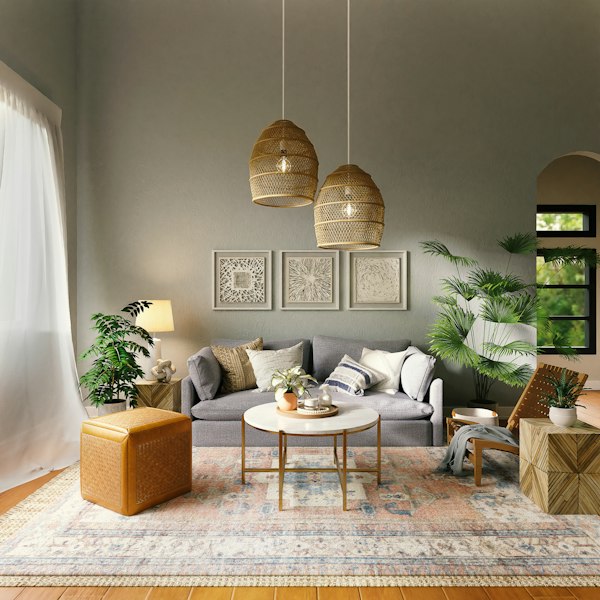
Layer your lighting instead. A floor lamp in the corner. A table lamp on a console or sideboard. If you have a ceiling fixture, put it on a dimmer. The goal is multiple sources of warm light that create depth and shadow, making the room feel more three-dimensional rather than flatly illuminated.
Colour: Braver Than You Think
The advice to paint small rooms white is so widespread it has become almost unchallengeable. And it is not wrong, exactly — light colours do reflect light, which helps.
But deep, saturated colours can transform a small room in a completely different way. A small room painted in a dark forest green or a rich terracotta or a deep navy does not feel smaller. It feels like a jewel box. The walls advance, yes — but they also create an enveloping quality that larger rooms struggle to achieve.
Try it in a room with no natural light — a hallway, a bathroom, a study. Dark colours in these spaces often look extraordinary, especially by lamplight.
Edit More Than You Add
The instinct in a small room is often to add things. More storage. More organisation. More shelves. Sometimes what a small room needs is the opposite — fewer things, given more space to breathe.
Go through everything in the room and ask whether it earns its place. Not just whether it is useful, but whether it contributes to the feel of the space. Useful but ugly objects that live permanently on show are making your room harder to be in, even if you do not consciously register why.
Three beautiful objects in a small room beat fifteen average ones every time. The editing is as important as the collecting.
The Small Room as Experience
The most memorable rooms I have ever been in have rarely been large. They have been specific. Particular. Designed with an understanding of what they were and what they were for.
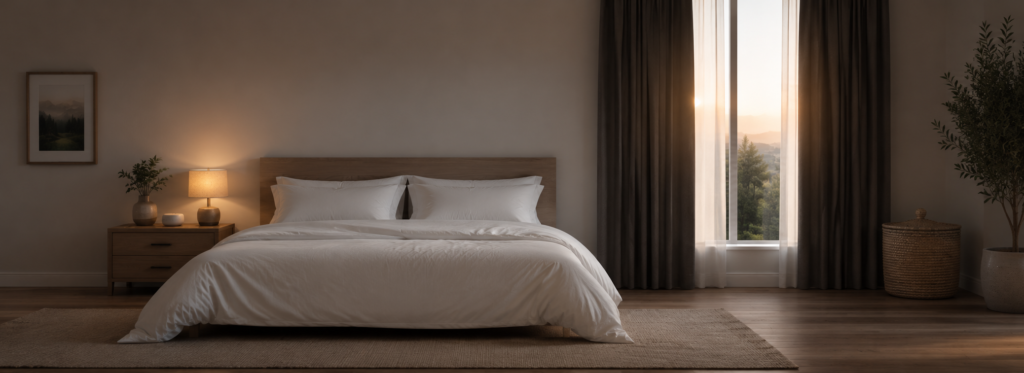
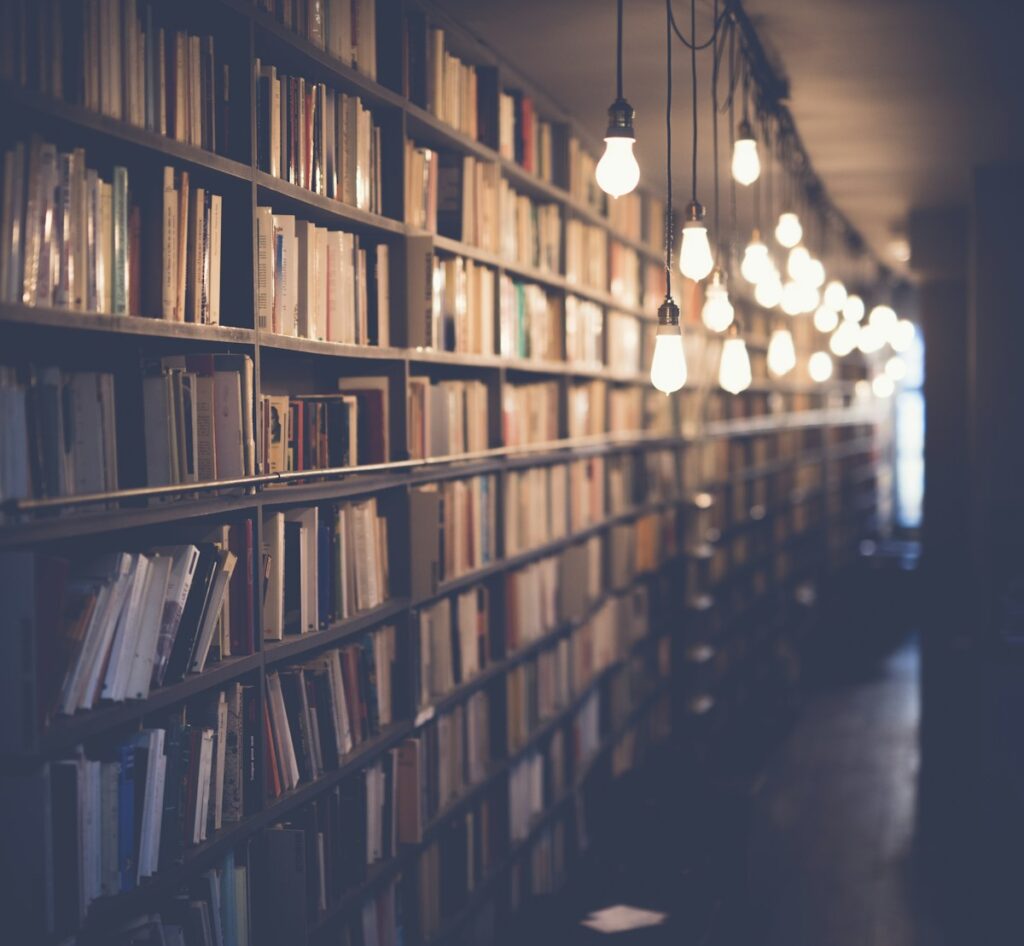
A small sitting room lined with books and lit by lamps and smelling faintly of a candle you always associate with that house. A tiny bedroom where everything fits perfectly and the view from the pillow is of a garden through a sash window. A compact kitchen where the cook knows where everything is without looking.
These rooms work not despite their size but because of the attention their size demanded. Small rooms make you think harder. When the thinking is good, the room is extraordinary.
Products You Might Like